Acechange is a small instant crypto exchange brand aimed at people who want to swap coins without opening a conventional trading account. It sits in the same broad category as ChangeNOW, SimpleSwap, Changelly and dozens of lesser known exchange aggregators. The pitch is familiar, choose two assets, send funds, and receive the converted amount at another address. The trouble is that Acechange has never built the public footprint needed to stand comfortably beside the better established names in that market.
The site experience is usually the first clue. Acechange is designed for a quick conversion rather than portfolio management, advanced orders, recurring buys or a serious fiat on ramp. That simplicity can be useful. A person with BTC who needs USDT or ETH for a one time payment doesn't necessarily need a full exchange dashboard. But a stripped down interface also means the buyer has less context about liquidity, counterparties and what happens if an order needs manual intervention.
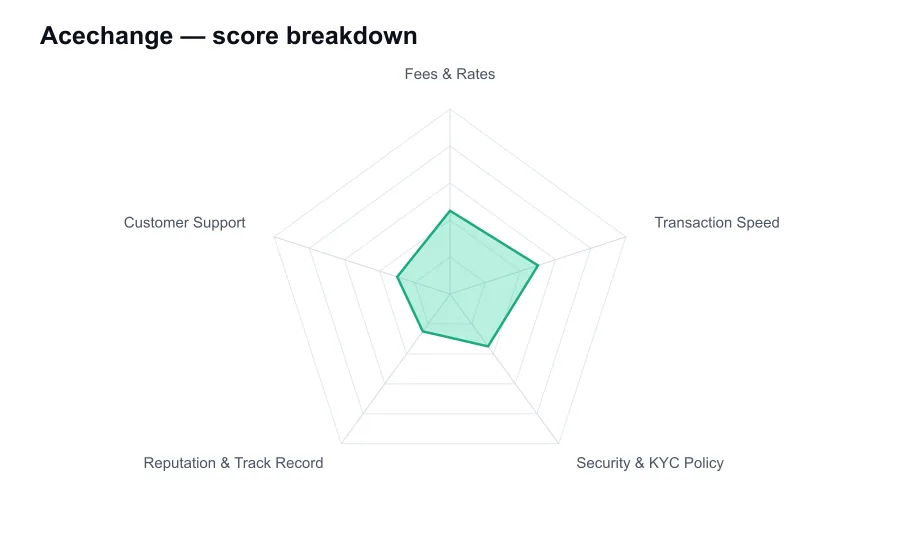
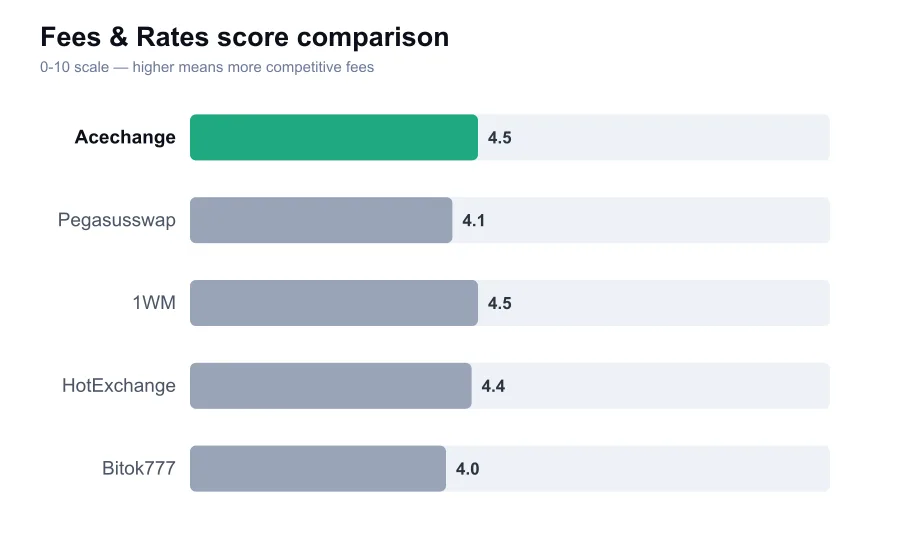
Pricing is the weak point. Acechange does not have the kind of highly visible, consistently documented fee schedule that gives users a reliable all in cost before they trade. Like many instant swap services, its effective charge is likely built into the quoted rate, with network fees and liquidity provider spreads affecting the final output. That model isn't inherently dishonest, but it makes comparison difficult. A quoted swap can look free while being materially more expensive than a visible 0.1% spot trade plus withdrawal at a major exchange.
For small convenience swaps, the difference may be tolerable. If you're exchanging the equivalent of $50 or $100, speed and simplicity can matter more than squeezing out every dollar. For a four figure transfer, I would want to compare Acechange's displayed output against at least two alternatives before sending anything. Fixed rate competitors such as ChangeNOW can also charge a premium, but they make the rate choice more explicit. Acechange hasn't earned enough trust for users to accept a vague spread blindly.
Transaction speed depends less on the Acechange page than on the asset, the route and blockchain congestion. A normal BTC to ETH or USDT conversion may complete after the inbound transaction has sufficient confirmations and an external liquidity provider fills the swap. In a clean market this can be reasonably quick, often within minutes after confirmations. That is not the same as guaranteed speed. Bitcoin deposits, network congestion, thin liquidity and compliance checks can make a supposedly instant order take far longer.
The important distinction is whether a provider tells you what is happening during that delay. Acechange has limited public evidence of the detailed status communication, service level commitments and incident reporting that experienced users should expect. A simple tracker is not enough if a transaction gets stuck. Customers need to know whether funds are awaiting confirmations, being exchanged, undergoing review or being returned. Larger rivals have had plenty of complaints too, but at least they have more visible support channels and documentation around these cases.
Its privacy posture needs a realistic reading. Instant exchanges are often marketed as no registration services, which generally means you can create an order without opening a standing account. It does not mean every transaction is immune from verification. Blockchain analytics, liquidity partners and anti money laundering rules can trigger requests for identity documents or proof of source of funds. Anyone sending coins assumes that risk, even when the checkout initially asks only for a receiving address.
That policy matters most because Acechange offers little independently verifiable information about how often reviews occur, who handles them, or how quickly disputed funds are released. A no KYC headline is not a security feature by itself. In some situations it can leave a customer with fewer clear contractual protections if a transaction is flagged. For people who value regulated custody and a published compliance structure, Kraken, Coinbase or a regulated European broker provide a much more accountable, though less private, route.
I would not use Acechange as a wallet. That is true of every noncustodial swap service in principle, but it deserves emphasis here. Send only the amount needed for a specific conversion, confirm the receiving address independently, and save the order ID, transaction hash and quoted output. Never leave balances on an intermediary page. If the provider offers a referral incentive or an unusually attractive rate, that should not lower your verification standards.
Reputation is where the service falls behind most sharply. Acechange does not have a long, easily auditable operating history, extensive third party coverage, recognizable licensing disclosures or a large body of credible user feedback. Absence of public scandal is not proof of reliability. In crypto, a quiet brand can simply be a small brand. That makes it difficult to judge how it behaves in the unhappy cases, which are the cases that actually reveal an exchange's quality.
Support is similarly hard to credit with confidence. A contact form or email address is better than nothing, but it isn't the same as demonstrated 24 hour resolution capacity. Users facing a delayed swap need prompt, human answers with transaction specific detail. The available public record does not give me confidence that Acechange has a mature support operation capable of handling complicated compliance holds, wrong memo incidents, chain upgrades or provider outages at scale.
There is also a basic operational issue with small swap sites. Their best quoted prices can depend on outside exchanges and market makers, so availability can change without much warning. A pair displayed on the front page may become unavailable after the order is created, or the payout route may need to be substituted. That is manageable if the service explains it clearly and asks permission. It is unacceptable if the customer learns only after funds have been sent.
Acechange could suit a technically capable user making a modest, low urgency conversion who has independently checked the live quote and accepts the risks of a lightly documented service. It is not a sensible first choice for a beginner, a business payment, a large BTC transaction or anyone who might need dependable recourse. The more money involved, the less persuasive its convenience becomes.
My view is blunt. Acechange has the basic proposition of an instant exchange, but not the transparency or established record that would justify trusting it with significant funds. The service may complete ordinary swaps without drama, yet that is a low bar in a crowded market. Better known noncustodial alternatives offer similar convenience with more visible policies and more evidence of operational depth. Treat Acechange as an unproven option, not a default exchange.