HotExchange is a small crypto exchange brand with a modest public profile, not a major global venue competing head-to-head with Coinbase, Kraken, or Binance. That should frame any review of it. Smaller exchanges can sometimes offer a simple interface or access to a particular market, but they also bring a harder question, namely whether there is enough transparent evidence to trust them with custody.
A customer should first establish exactly which HotExchange domain and legal entity they are dealing with. Crypto names are often reused, cloned, or promoted through social channels with little context. A polished website is not verification. Before depositing, check the domain carefully, read the terms, find the registered operator and jurisdiction, and make sure the support contacts and withdrawal rules match across the platform's own pages.
The service appears to be designed as a centralized exchange experience rather than a pure wallet-to-wallet swap. That means users may create an account, deposit into platform-controlled addresses, trade or convert assets, and request a withdrawal later. This is familiar, but it raises the stakes. Once coins sit in an exchange wallet, the user is exposed not only to market movements but also to the platform's solvency, security, and withdrawal controls.
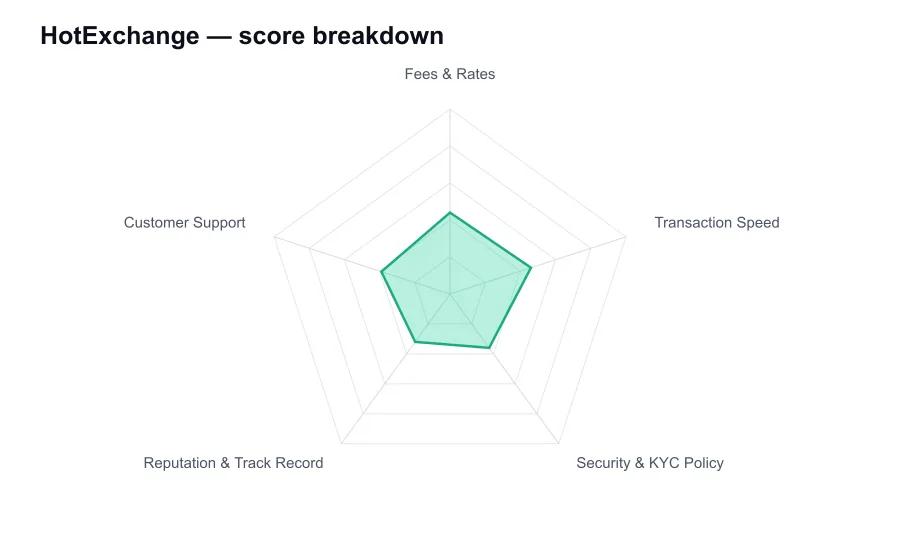
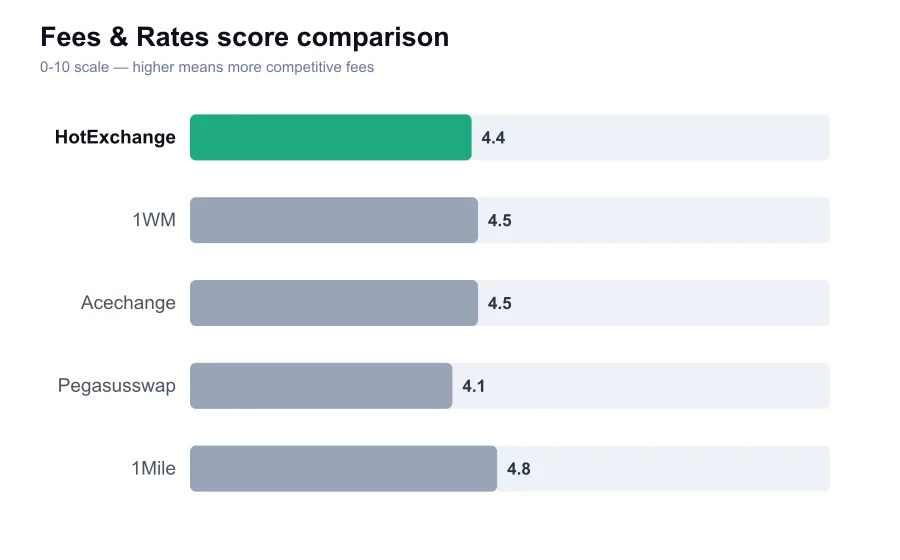
Fees are not presented with the depth expected from an exchange that wants serious traders. Major venues publish maker and taker schedules, withdrawal fees, VIP tiers, and sometimes liquidity rebates. HotExchange does not have a widely verifiable fee structure with that level of clarity. If the service uses a conversion model, its spread may be embedded in the price. If it offers trading, users should inspect the actual fill price, not merely the displayed fee.
That lack of detail makes it hard to call the platform cheap. A low headline trading fee can be irrelevant if the order book is shallow and the trade executes well away from the reference market price. Slippage is a fee in all but name. Before trading anything beyond a small amount, compare the quoted price with liquid markets on Kraken, Coinbase Advanced, Binance, or OKX, adjusted for withdrawal costs.
Liquidity is likely the practical limitation. Big exchanges attract market makers, high volume, and tight spreads on major pairs. Small venues often look acceptable on a chart until an order larger than a few hundred dollars hits the book. If HotExchange does not publish independently credible volume data or show deep, live markets, users should assume liquidity could be inconsistent. Limit orders are safer than market orders in that setting.
Speed is also two different questions. Internal balance updates and order matching can be near instant. Deposits and withdrawals are not. They depend on blockchain confirmations, wallet operations, risk screening, and whether the platform has enough hot-wallet liquidity available. A provider with a thin operating history should not be trusted for time-sensitive transfers, even if its interface promises quick processing.
Withdrawals deserve a test before any substantial deposit. Deposit a small amount, trade if necessary, then withdraw to a self-custody wallet. Check the actual time, the network fee, the transaction ID, and whether support responds if you ask a basic question. A successful first withdrawal is not proof of long-term safety, but an exchange that cannot pass this basic test should be avoided immediately.
Security disclosures are too limited to award much confidence. Mature exchanges explain two-factor authentication, address whitelisting, cold storage practices, incident response, proof of reserves, and their regulatory position. HotExchange does not have a strong, independently verifiable public security record on that level. Customers should enable every available account protection feature, use a unique password, and avoid leaving balances on the platform.
KYC and compliance treatment should be read in the actual terms before funds are sent. Many exchanges allow registration with minimal information but later require identity documents before withdrawals, larger limits, or a risk review can proceed. That is not unique to HotExchange, but vague policies are more concerning at a lesser-known operator. Anyone unwilling or unable to complete verification should not deposit first and ask questions later.
Its reputation is the weakest part of the offer. There is not a durable, broad record of independent reporting, mainstream industry coverage, or long-running public customer feedback that establishes HotExchange as a trusted custodian. Absence of famous complaints does not equal a clean record. Very small platforms may simply have too few visible users for problems to become widely documented.
Support is likely to be digital and ticket-led, which is reasonable in crypto, but the test is responsiveness during a withdrawal or verification problem. Publicly visible support infrastructure, clear response times, and real escalation routes matter more than a chat bubble on the homepage. I would not expect the reliability of a large regulated exchange, where a customer can at least point to formal complaint channels and a named corporate entity.
There are safer ways to get the same basic outcome. For liquid crypto trading, use a major exchange and move long-term holdings to your own wallet. For a one-time asset conversion, a known instant-swap provider may reduce the time funds are held by a small centralized business. HotExchange only makes sense if it offers a specific pair, regional payment method, or rate that clearly beats those alternatives after every cost is included.
My assessment is cautious because the evidence is cautious. HotExchange has not demonstrated the transparency, liquidity, or public operating record needed to justify substantial deposits. It may function for a carefully tested, small transaction, but that is a low bar. Treat it as experimental infrastructure, not as a place to store savings or execute a trade that must settle on schedule.