XChangic is another small online exchange brand operating in the broad market for direct crypto and electronic payment conversions. Its proposition is familiar: choose a pair, submit an order, transfer funds, and receive the chosen asset or payment. That model can feel easier than navigating a full exchange, particularly for users who only need to move between a wallet and a local payment method. Ease, however, should not be confused with a low risk transaction.
The brand does not carry the level of universally recognizable market history associated with Binance, Kraken, Coinbase, or even the longer established names on regional exchange monitors. That is not an accusation of wrongdoing. It is a practical reason to put more effort into due diligence. With a small exchanger, the user has fewer public datapoints to judge reserves, ownership, dispute practices, and operational resilience.
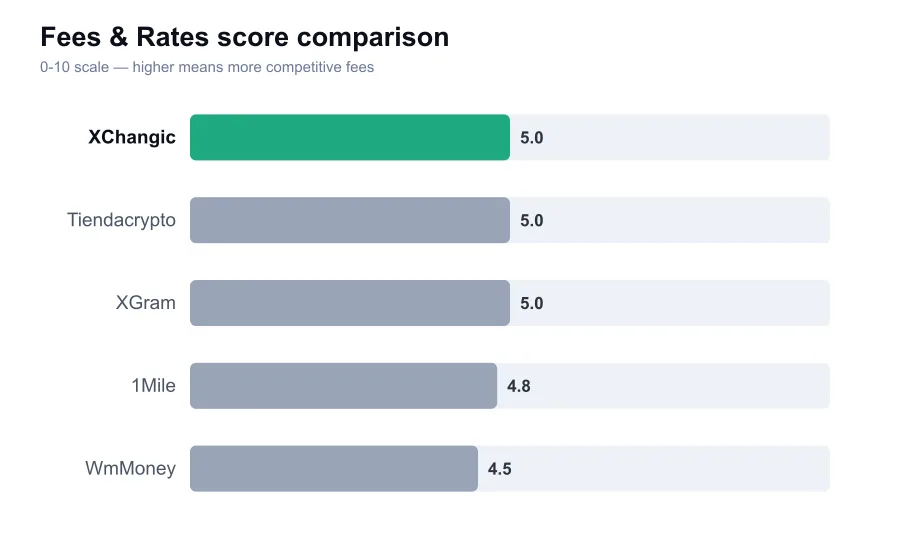
XChangic should be evaluated from its quote page outward. The quoted receive amount is the meaningful price. Direct exchangers often do not show a neat maker and taker fee because their compensation is blended into the rate. In less liquid directions, that spread may be larger than a customer expects after seeing a favorable headline price. The best comparison is the number of units that will actually reach your wallet or bank destination.
Don't compare a USDT pair with the spot rate alone. A competitor with a visibly stated service fee can still deliver more after its better base rate, while a provider advertising no commission may be less attractive after spread and network costs. Check whether the quote is fixed or floating, and whether the order terms allow recalculation if the market moves while confirmations arrive. That detail can matter considerably on volatile coins.
The service may be most competitive on routes it handles regularly and has adequate reserves for. A rare token, a nonstandard network, or a large bank payout can turn an attractive estimate into an order that requires more time or additional coordination. Asking support whether a large direction is available before sending payment is sensible. A reply in writing gives you something concrete to rely on if the order later stalls.
Speed is often advertised broadly by online exchangers, yet settlement has several stages. An incoming crypto transfer must reach the correct address and acquire the confirmations required by the operator. The exchanger then needs to release crypto or initiate a fiat payout. Bank processing may take longer than the exchange itself, especially outside business hours or on a rail with its own anti fraud controls.
XChangic may work quickly for normal sized, well matched orders, but users should leave room for exceptions. A missing tag, payment from a different name, altered order amount, or suspicious transaction pattern can stop automation. The customer who sends first and then discovers an unsupported network has little leverage. Confirm the network, destination format, amount boundaries, and payment instructions with care before clicking send.
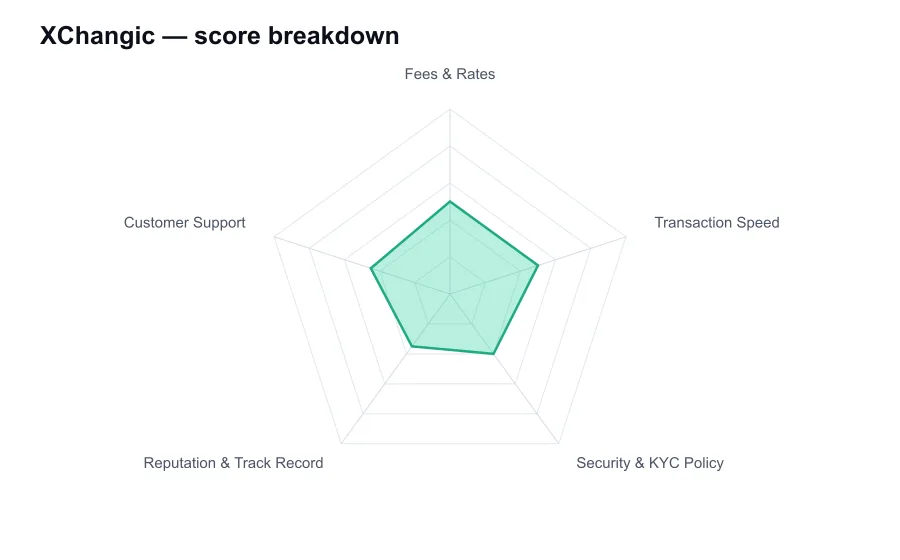
Security is the central tradeoff. An order based exchanger takes custody of the asset temporarily, and there is no familiar exchange account security stack protecting the customer from the counterparty itself. Two factor authentication on a login, if offered, does not answer whether operational wallets are segregated or how key access is controlled. Public technical assertions are useful only if they are accompanied by a track record that can be independently assessed.
The KYC position should be read through the terms, not inferred from a lack of account creation. Financial crime controls can apply to a direct exchanger even when the front end allows an order without registration. A request for proof of identity, proof of funds, or a payment explanation may arrive after a transfer is received. That is particularly relevant for unusually large transactions or payments that do not originate from the order creator.
A user who values privacy should choose legal and transparent payment routes, keep personal details consistent, and avoid making a third party send money into their order. Trying to bypass review by splitting transactions or using mismatched accounts makes a problem more likely, not less. If verification would be unacceptable, use a provider whose policy is explicit before funding an order, rather than hoping that the issue never arises.
Reputation research for XChangic should be recent and specific. Look beyond a single star score. Are reviews dated over time, do they describe the same payment directions you intend to use, and are complaints answered with identifiable order context? A provider can handle hundreds of simple transactions well yet still reveal its quality through the few cases where a customer has a legitimate exception. Those are the reports worth reading.
I would also be wary of cloned pages and contact details found through advertisements or random social media posts. Bookmark the verified domain after independently locating it, and do not accept replacement wallet instructions through an unsolicited message. This is a risk across the entire exchanger market, not a criticism unique to XChangic. Small brands offer fewer obvious signals to help users distinguish a real channel from an impersonator.
Customer support is more important here than glossy design. The useful test is whether staff can clearly answer questions about network support, order limits, rate type, and verification before payment. Vague promises that everything will be fast are not good enough. If there is a delay, expect support to need the order ID, sender address, transaction hash, and payment receipt, so prepare those records from the start.
My view is that XChangic can be considered for a modest exchange only after the quote, terms, and current reputation signals pass inspection. It has not earned the kind of blind confidence that lets a user skip those checks. Use a test order, do not send funds from an unrelated person, and preserve every receipt. For recurring purchases, corporate payments, or money that cannot be delayed, a larger and more transparent platform is the better answer.