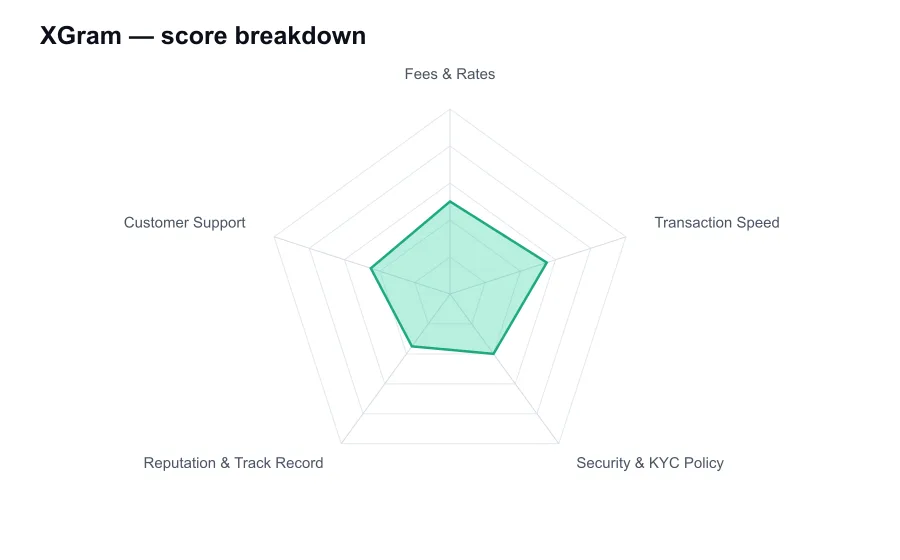
XGram occupies the same practical niche as many compact exchange services: direct swaps between cryptocurrencies and selected payment methods, without the machinery of a full brokerage account. For a user who already understands wallets and simply wants to convert one asset into another, that can be attractive. XGram is not, however, a brand with the extensive public institutional footprint that would make it an easy recommendation for substantial balances.
The distinction between an exchanger and an exchange shapes the whole review. XGram is a transaction counterparty for the duration of an order. It does not provide the price discovery, custody disclosures, deep market data, or account protections people may associate with large centralized trading platforms. The customer is buying convenience and a prearranged payout path. They are also accepting that the operator must receive funds before finishing its side of the deal.
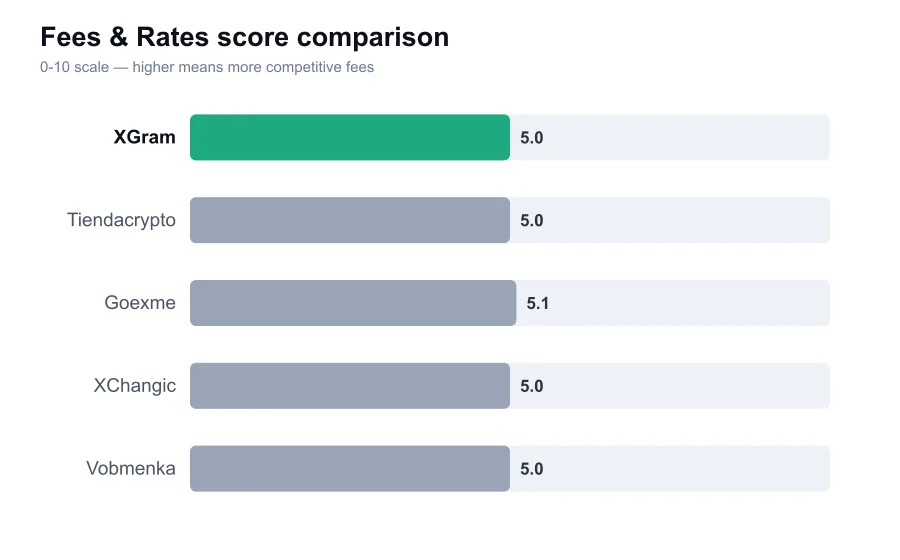
Price deserves more skepticism than marketing usually encourages. The number that matters is the exact payout visible after selecting the coin, network, and payment direction. A service can charge no separate commission and still earn a healthy spread. On a liquid stablecoin route, the spread may be tolerable. On an obscure asset or a fiat payment method with elevated fraud risk, it can become much more expensive than trading on a major exchange and withdrawing yourself.
XGram should not be judged from a cached rate, a banner, or a search result. Quotes can change with reserves and market movement. Read the order page closely enough to know whether the rate is fixed after payment or recalculated after the deposit receives confirmations. If it is floating, the asset's price can move against you during that period. That is ordinary exchange risk, but it should be disclosed and understood before funds leave your wallet.
There is also a difference between a low quoted fee and a good execution. A card or bank payout could involve a lower headline cost but a less favorable conversion rate, while an on chain payout may require network fees that make a small order unattractive. Users making repeated conversions should calculate the effective percentage cost from the market value sent and the value received. That number is more useful than any promotional claim.
Transaction speed with XGram will depend heavily on the route chosen. Crypto to crypto swaps can be relatively prompt once the incoming transaction is confirmed, provided the chosen network is supported and the order is not flagged. Fiat related directions introduce another layer, because payout systems have banking hours, recipient checks, and their own processing times. A fast internal release does not guarantee instant arrival in the recipient's account.
I would be particularly cautious with fast networks that have tags, memos, or destination identifiers. A single missing field can convert an automated order into a manual recovery process. Similarly, sending a token on the wrong chain can create a dispute that takes days or cannot be resolved at all. The responsibility for matching the order instructions remains with the sender. Screenshots and transaction hashes are not paperwork for its own sake, they are the basis of any support case.
There is no persuasive reason to keep funds at a direct exchanger longer than necessary. Send the exact required amount, then move any received crypto to a wallet you control if you do not need it immediately. Security claims on a website cannot substitute for verifiable reserve practices, independent security reporting, and a long operating history. XGram may operate responsibly, but the public evidence available to ordinary users is limited enough to warrant a conservative approach.
Its KYC policy also needs to be approached without wishful thinking. A service may offer a short ordering process and still reserve the right to request identification, source of funds information, or an explanation for a transfer. That possibility is common in financial services and can be triggered by the payment method or transaction pattern. The absence of a mandatory account sign up is not the same thing as an enforceable no KYC guarantee.
Anyone who is unwilling or unable to provide documents should resolve that issue before creating a significant order, not after the service has received the deposit. Read the rules concerning verification, refunds, and disputed payments. In particular, find out what happens if KYC is requested and cannot be completed. Clear terms do not eliminate the inconvenience, but unclear terms make the customer far more exposed during a hold.
XGram's reputation is the category that keeps it below a confident recommendation. A provider needs more than a working interface and a few favorable mentions to establish trust. Long dated feedback from several sources, visible handling of negative reviews, and clear contact and legal information are stronger signals. If those signals are sparse, a good reviewer should say so rather than fill the gap with assumptions based on the site's appearance.
Checking current third party monitor entries can help, but customers should read the newest low rated reports as carefully as the positive ones. A complaint about a delayed order is less alarming if it includes a clear explanation and a documented resolution. A recurring pattern of missing replies, changing instructions, or unresolved holds is a different matter. Conditions can change quickly for small exchange operations, so old feedback alone is not enough.
Support should be evaluated before money is sent. Ask one precise question about the route you intend to use, such as confirmation requirements or whether the quoted rate is fixed. A competent response should be concrete, written, and consistent with the terms. If the answer is evasive or pressure is applied to pay quickly, walk away. Reliable operators do not need customers to ignore basic checks.
XGram may be an acceptable convenience tool for a small, carefully checked transfer, especially if it offers a route that larger platforms do not handle well. It is not a place I would use for a major conversion merely because it looks simple. The market has too many alternatives for that. Treat the service as unproven until its current quote, external feedback, and support response give you a stronger reason to proceed.