Changelly is one of the best known names in the instant crypto exchange market. Founded in 2015, it has outlasted a large number of copycat swap services and built a recognisable consumer brand around simple asset conversions. It is still not a conventional exchange with a deep public order book for retail users. The core service finds a route for one cryptocurrency into another, taking a deposit and sending the purchased asset to the destination wallet.
That long market presence is Changelly's strongest asset. Many people encounter it through wallet integrations, partner sites, or its own exchange page, and the brand feels more mature than a newly launched swap widget. It also provides fiat purchase options through third party payment partners and has expanded its product range beyond a bare conversion form. But familiarity should not be mistaken for cheap execution. Changelly is convenient, not automatically the best priced route.
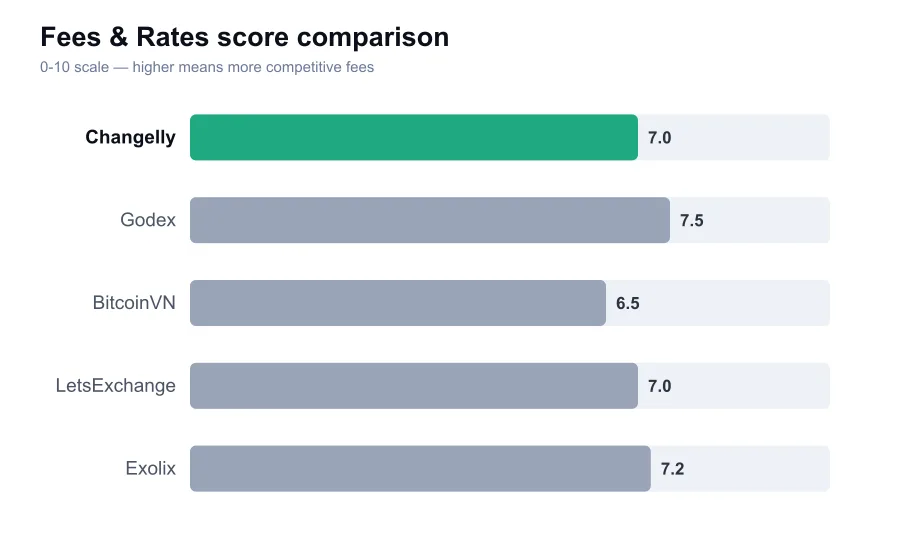
For crypto to crypto swaps, Changelly has historically advertised a 0.25% fee on floating-rate exchanges. That looks attractive beside a 0.5% headline charged by some competitors, and on paper it is. The actual customer cost is broader than that figure. Liquidity provider pricing, market spread, and blockchain fees all affect the number of coins delivered. The sensible comparison is always the final payout for the exact amount you plan to send, not a single headline percentage displayed on a marketing page.
On major routes, Changelly can produce acceptable quotes, especially for users who value the familiar interface and broad asset coverage. It can also be noticeably more expensive than a direct spot trade at Kraken, Coinbase Advanced, Binance, or OKX once the trade is large enough to justify deposits and withdrawals. Its fiat purchases deserve even more scrutiny. Card transactions through third party partners can carry significant processing costs, exchange-rate spreads, and verification friction. It is a convenience purchase, not a low cost on-ramp.
The platform offers both floating and fixed-rate transactions. Floating rate gives the final price available as the exchange proceeds. Fixed rate protects the quoted result for a limited payment window, usually at a higher effective price. This is not merely a cosmetic toggle. During volatile periods, a fixed rate can prevent a disappointing final amount, particularly where the source asset needs several confirmations. For small experimental swaps, floating is fine. For a meaningful conversion, price certainty has real value.
Changelly's range of listed assets is broad, and the company has put effort into making different chain options visible. That is helpful, but it creates room for expensive errors. USDT exists across several chains, stablecoins have similar names, and some destination exchanges require a memo or tag for certain assets. Changelly cannot undo a transfer sent to the wrong blockchain or an address missing required information. The user experience is friendly, but crypto transfers still demand the same care they did ten years ago.
Transaction speed is generally good once the incoming transfer has enough confirmations and a liquidity route is available. Simple swaps involving fast chains may finish within minutes. Bitcoin can take from roughly half an hour to much longer depending on fee conditions and confirmation requirements. Ethereum congestion can create the same frustration. Changelly's status pages and transaction tracking help, though they cannot make an unconfirmed deposit move faster. Users expecting card-like instant finality will be disappointed by the underlying rails.
There is another speed issue with fixed-rate orders. The funds must arrive within the specified time, and the deposit must match the expected amount. If you use a wallet that estimates fees poorly or wait too long before broadcasting, the fixed rate may no longer apply. That does not mean Changelly has taken a fee unfairly. It means the market protection was conditional. Still, the platform could do a better job making this risk impossible to miss before users generate a deposit address.
Changelly describes itself as noncustodial because it does not hold a conventional ongoing customer balance after a swap completes. That is a meaningful distinction from leaving funds on a centralized exchange. Yet the service sits in the middle of the transaction and depends on its own systems, counterparties, and screening procedures. It is not a decentralized exchange and it does not provide the cryptographic settlement guarantees of an on-chain AMM. Users are trusting a company with temporary control during execution.
KYC is another area where the marketing language needs careful reading. Changelly can facilitate many swaps without account registration, but it uses AML and risk controls and may request identity documents, proof of funds, or other information for flagged transactions. A review can delay access to funds. This policy is common among centralized instant exchange providers, and it is often driven by compliance obligations, but it is still a practical risk. Do not use Changelly for a transfer if a potential document request would create a serious problem.
Its reputation is substantial but not spotless. Changelly's age, brand recognition, wallet partnerships, and large public review footprint give it more credibility than lesser known instant exchangers. At the same time, a company this visible attracts a great deal of criticism, much of it concerning frozen transactions, slow KYC cases, floating rate disappointment, and disputes about final payouts. Some complaints arise from misunderstood blockchain mechanics. Others raise fair questions about communication during a hold. The volume of feedback means readers should look for patterns, not cherry pick a few reviews.
Customer support is available around the clock through chat and email channels, and the knowledge base is reasonably extensive. For an ordinary question, Changelly is easier to reach than many small crypto services. It has transaction IDs, tracking tools, and support procedures that make the normal path manageable. The experience gets less impressive where compliance or recovery is involved. Replies can become procedural, and the resolution timeline can feel opaque while funds are locked. That is the point where its consumer-friendly presentation meets the hard reality of compliance operations.
I would trust Changelly more for a normal swap than an unknown new exchange widget, but I would not send a large amount just because the logo is familiar. Test a route first. Compare the delivered amount with ChangeNOW and a direct exchange. Use a fixed rate if the difference between estimate and final payout would bother you. If you are buying crypto with a card, calculate the all-in cost before confirming, because that route can be far more expensive than the crypto conversion screen suggests.
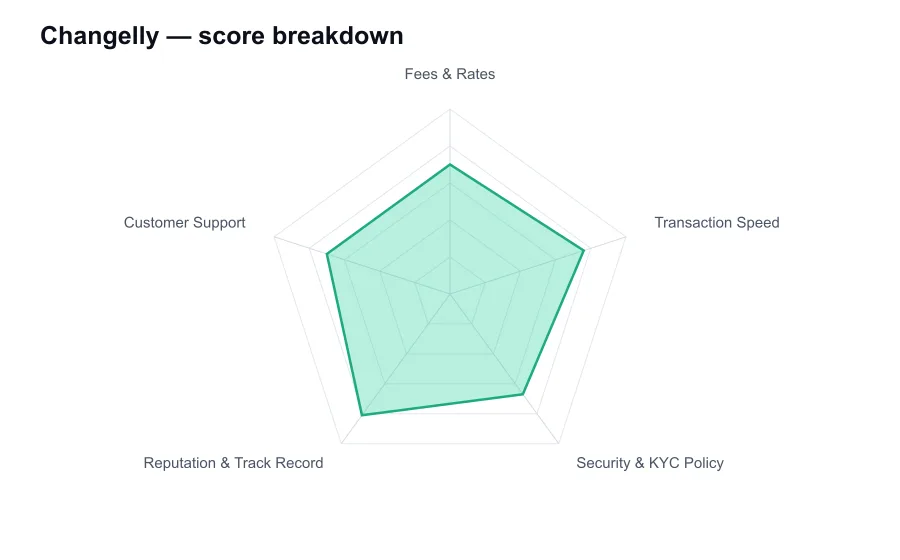
Changelly remains a capable and established instant exchange, but its status should not exempt it from price discipline. It earns points for breadth, longevity, and a polished transaction flow. It loses points because the most difficult situations, particularly AML holds and third party fiat purchases, can turn a supposedly simple product into a slow and costly experience. For an occasional self custody conversion it is a credible option. For regular trading or large purchases, there are usually more transparent places to do business.