Swapuz is an instant crypto exchange that targets users who want to swap assets without registering for a conventional exchange account. It has been operating since 2019 and presents itself as a broad, non-custodial conversion service, with a long list of coins, tokens, and network routes. The pitch will sound familiar to anyone who has used ChangeNOW, SimpleSwap, or StealthEX. Pick a pair, send the deposit, and receive the new asset in a wallet you control.
Its strongest selling point is choice. Swapuz has built its service around a large asset catalogue and multiple exchange modes, which makes it useful when a mainstream platform does not list a token or when a user wants to move quickly between ecosystems. That flexibility can be genuinely valuable. A trader holding funds in a private wallet does not always want to deposit into a centralized exchange, wait through security checks, make a trade, and then withdraw again.
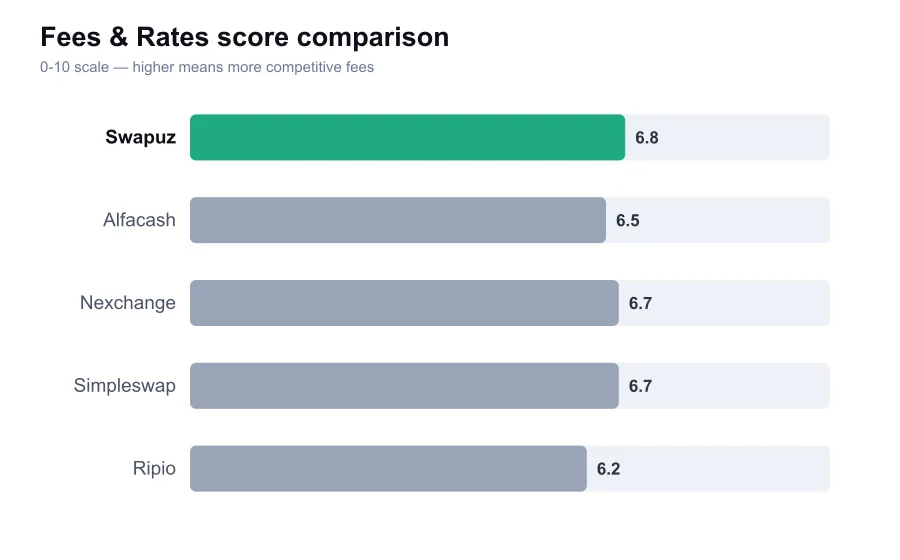
The fee story, however, needs a sharper eye than the marketing language used by most instant services. Swapuz offers floating and fixed-rate swaps, and its effective cost depends on the selected route rather than on one simple universal percentage. The quoted output can incorporate liquidity-provider pricing, the platform's margin, and blockchain costs. With floating-rate orders, market movement after the order is created can change the final amount. The rate shown is a starting point, not always a promise.
That makes comparison shopping essential. For a liquid pair such as BTC to USDT or ETH to SOL, take a minute to get live quotes from Swapuz, StealthEX, ChangeNOW, and any exchange where you already have verified access. Swapuz can be a good quote source, but it is not reliably the cheapest across every asset and every hour. The difference is often modest on a small order. On a large order, a modest difference becomes a real cost.
Fixed-rate swaps are the more interesting part of its offering. They are designed to reduce uncertainty by locking the expected payout, subject to the provider's time window and deposit conditions. This is useful when prices are moving violently or when the precise output matters, such as sending a fixed amount to another wallet. It often comes at a less attractive rate than a floating swap, which is normal. Paying slightly more to remove a volatile-price surprise can be rational.
I would still avoid assuming a fixed quote protects against every operational issue. You must send the correct amount, on the correct network, and within the relevant window. An underpayment, a late deposit, or use of an unsupported chain can send the order into manual handling. The same goes for destination wallets that need a memo or tag. Fixed pricing is a pricing tool, not an insurance policy against user error or blockchain disruption.
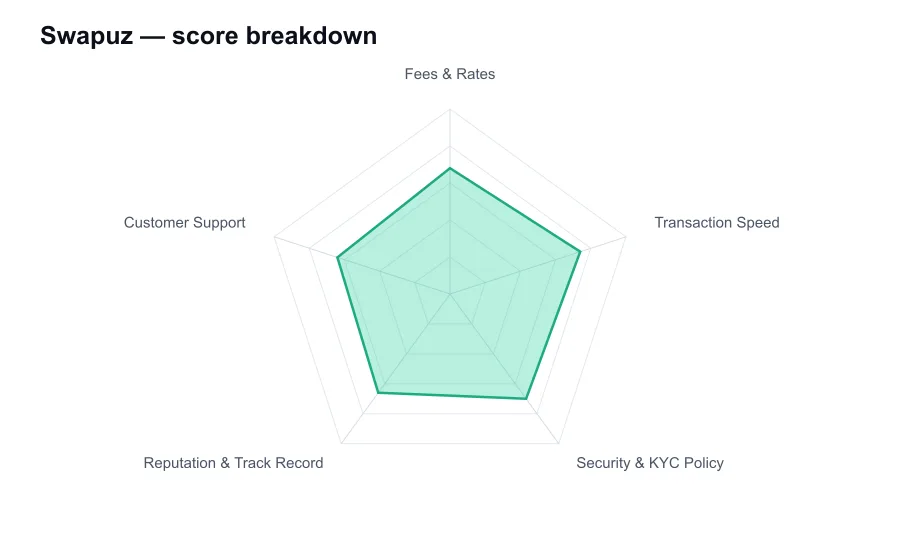
Transaction speed is decent on ordinary routes. Once the deposit has enough confirmations, the service can source liquidity and send the payout promptly, particularly for well-supported assets. The visible wait often comes from the chains themselves. Bitcoin confirmation policy, Ethereum gas conditions, network maintenance, and obscure-token liquidity can all turn a quick exchange into a longer process. Anyone who needs funds at a precise time should avoid beginning with a freshly broadcast low-fee transaction.
Swapuz's status flow is most useful when a transaction is uneventful. The tougher test is a delay. In that situation, customers need a clear distinction between an unconfirmed incoming deposit, a conversion still being processed, and an outgoing payout waiting on a blockchain. A provider earns trust by giving specific status information rather than generic reassurance. Save the order page, deposit hash, and payout hash immediately. Those records are the backbone of any support case.
Like the rest of this category, Swapuz is often described as non-custodial because it does not invite customers to keep a persistent balance on the platform. That is a favorable design for users who prefer self-custody. The terminology should not be romanticized. Funds leave the customer wallet and are handled during the exchange process before the output reaches the chosen destination. This is lower exposure than keeping a large balance at an exchange, but it is not a trustless atomic swap.
Swapuz also offers a no-registration style of use for standard conversions, but no-registration is not a blanket promise of immunity from KYC. The service has compliance controls and may request verification if an order is considered high risk or is flagged by its AML systems. That is a feature of the modern crypto compliance landscape, not a peculiarity of Swapuz. Customers who demand absolute certainty about documentation requests should not use this class of provider at all.
The security questions are therefore practical as much as technical. Never copy an address from an untrusted browser extension. Verify the network, especially for USDT and USDC, where the same ticker exists on several chains. Be wary of sending directly to a deposit address at another service if it needs a memo. And do a low-value test on an unfamiliar route. These basic habits matter more than clever slogans about privacy or convenience.
Swapuz has a somewhat more established history than a brand-new swap widget, but it remains a smaller name than the market leaders. Its years in operation are meaningful, and the provider has accumulated a visible presence across crypto directories and user-review channels. Still, the independent evidence base is not as deep as it is for the largest exchanges or the longest-running instant services. That should influence the size of transaction you are willing to entrust to it.
I would characterize its reputation as adequate rather than exceptional. There are users who value the token range and report smooth conversions, while the ordinary complaints of the sector also appear: delays, changing floating rates, and frustration when compliance checks arise after a deposit. None of that is enough to condemn the platform. It is enough to reject blind trust. A service that handles a small swap well has passed a useful test, not earned carte blanche over a life-changing sum.
Support is available through the platform's online channels, and it is most likely to be effective when the customer provides precise transaction data. A good request includes the order ID, sending hash, receiving address, asset, network, and a concise description of the issue. Repeated messages without those details do not speed up blockchain operations. Support quality appears serviceable for standard cases, but the smaller scale means I would prefer a larger provider for a complicated or high-stakes conversion.
Swapuz is a credible convenience option for someone who needs broad asset coverage, values a fixed-rate choice, and knows how to handle self-custody safely. It is not where I would trade frequently, store money, or send a major amount without prior testing. The platform's strengths are real, but so are the category's limits: opaque all-in pricing, dependence on external liquidity, and possible compliance reviews. Use it as a tool for a defined job, then move on.