Ripio is one of Latin America's longer-running crypto companies, with roots in Argentina dating back to 2013. That history separates it from the endless stream of newly launched exchanges. It began as BitPagos, moved through consumer wallet and lending products, and developed into a regional crypto platform serving markets where inflation, currency controls, and cross-border payment friction make digital dollars and Bitcoin more than a speculative hobby.
The company has always made more sense in its home region than as a global exchange trying to beat Coinbase or Binance everywhere. Ripio's value is local access. It has built products and payment connections for users in Argentina, Brazil, Uruguay, Colombia, Mexico, and other Latin American markets, though product availability differs by country. A local user who needs a familiar app and local-currency rails may find that far more useful than an offshore exchange with better charting tools.
Ripio offers wallet functionality, crypto buying and selling, and in some markets access to trading-oriented services such as Ripio Trade. It has also experimented with Web3 and token-related offerings. The app is aimed at ordinary users first. That is mostly a compliment. A newcomer can buy BTC or stablecoins without being dropped straight into an intimidating professional trading interface.
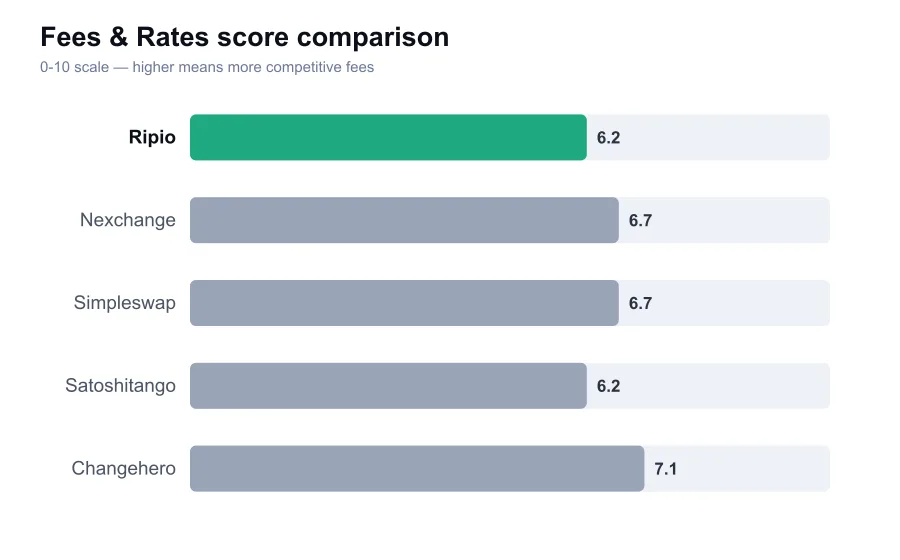
That beginner-friendly approach is not the same as low cost. Ripio's retail buy and sell pricing can include a spread, and the exact cost depends heavily on country, payment method, asset, and product used. Customers should inspect the final quote before confirming instead of relying on a single percentage found in an old review. Local bank transfer, card purchase, and market trading can have very different economics.
For users with access to Ripio Trade, the trading venue is generally the better place to compare market pricing and use more deliberate order types. Retail instant purchases are convenient but rarely the cheapest way to build a position. This is true at nearly every consumer exchange, but it matters especially in Latin America, where fiat conversion costs and local liquidity can make the gap noticeable.
The platform's strongest fee argument is not necessarily that it is the lowest-cost crypto venue in the world. It is that a regional user may save time and avoid awkward workarounds by using familiar payment methods and local support. That convenience has value. It should not stop customers from comparing rates with Mercado Bitcoin, Bitso, Lemon, Belo, Binance, or a local bank-linked alternative where available.
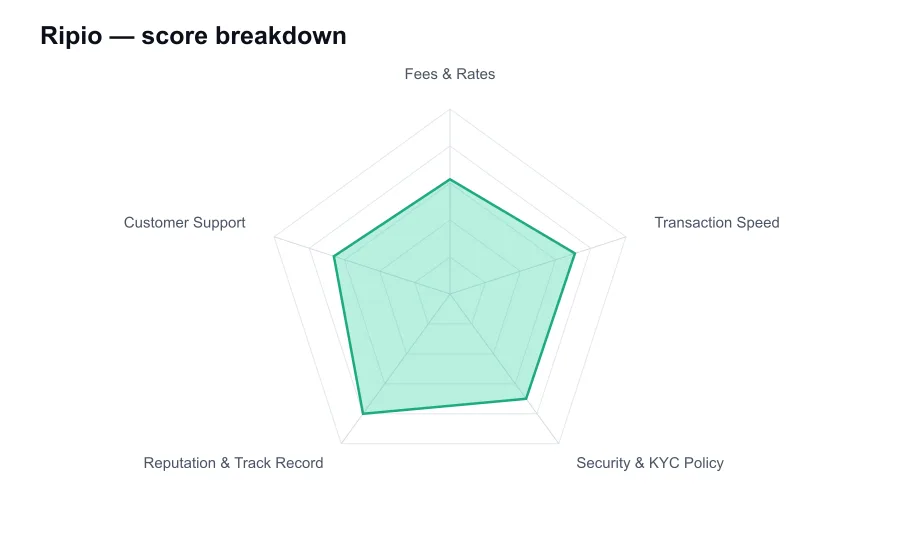
Transaction speed is good for internal activity and market orders, but fiat movements remain dependent on local banking infrastructure. Crypto deposits and withdrawals also depend on the selected network and confirmation requirements. A stablecoin transfer on a low-cost network may be quick. A Bitcoin withdrawal during congestion may not be. Ripio cannot make a public chain move faster merely because its app feels fast.
The app experience is one of Ripio's better qualities. It is designed for people who may be using crypto to preserve purchasing power or send value across borders, not solely for professional speculation. Account balances, purchase flows, and basic portfolio views are easy to grasp. More sophisticated traders may find the ecosystem less flexible than an exchange built around advanced order types, API tools, and deep global liquidity.
Ripio is a centralized provider, so KYC is part of the relationship. Users should expect identity verification and, depending on local rules and transaction patterns, possible requests for additional information. In the regional context, that is not a surprise. The company operates in regulated financial environments and cannot realistically provide a permanent anonymous on-ramp to local currency.
From a security perspective, Ripio has the advantages and liabilities of an established custodial platform. It has had years to build operational controls, account security processes, and compliance systems. It also holds customer assets within a centralized business structure, which creates custody and counterparty risk. Enable two-factor authentication, use a unique password, and withdraw long-term holdings to self-custody if you know how to manage keys safely.
Its track record is stronger than most regional competitors simply because it has lasted through several crypto cycles, Argentina's economic volatility, and major shifts in regulation. Ripio has raised institutional funding and gained recognition across the Latin American fintech market. Longevity does not make it risk-free, but it is a useful signal that the company is more than a temporary trading brand.
There are still reasons for caution. Regional availability changes, asset listings vary, and legal or tax treatment can differ radically between countries. A customer in Argentina may have a completely different experience from one in Brazil or Colombia. Do not assume a feature advertised in a regional campaign is available to every verified customer, and do not buy crypto without understanding your local reporting obligations.
Support is generally more relevant here than it is at a global exchange because users often need help with local deposits, bank-transfer status, and verification documents. Ripio provides help-centre resources and support channels, and its Spanish-language orientation is a practical strength for much of its audience. User feedback is still mixed, as it is with nearly every exchange. Faster handling of account restrictions and cash-transfer disputes would improve the experience.
I would not recommend Ripio to a high-frequency trader looking for the tightest global spreads. Its edge is accessibility and regional familiarity. Nor would I recommend leaving a life-changing amount in any custodial app, regardless of its history. But for a Latin American resident who wants a recognizable gateway between local money and major cryptoassets, Ripio is a credible option.
The best way to use it is conservatively. Verify the account before you need it, start with a small bank transfer, compare the all-in quote, and learn the withdrawal process before accumulating a larger balance. Users who need dollar exposure through stablecoins should also understand the issuer and network of the stablecoin they are buying, not just the logo in the app.
Ripio earns respect for surviving and building in a market that is harder than most outsiders appreciate. It is not the cheapest exchange, and its product range is uneven across jurisdictions, but it has a real regional purpose and a much deeper record than a typical retail crypto app. For its intended audience, that counts for a lot. For everyone else, a larger global exchange may offer better pricing and trading depth.