SimpleSwap is one of the better-known instant crypto exchange services. It lets users exchange one digital asset for another through a relatively clean web interface, usually without opening a traditional custodial trading account. The company is not an order-book exchange in the Binance or Kraken sense. It is a swap service that sources liquidity and delivers the purchased asset to the wallet address the user provides.
That distinction shapes nearly every part of the experience. SimpleSwap is aimed at someone who already has crypto and wants to convert it without depositing into a full exchange, passing through an elaborate trading screen, or managing several accounts. Choose a pair, enter a recipient address, send the source asset, and wait for delivery. For common pairs such as BTC to ETH, ETH to USDT, or LTC to BTC, the flow is genuinely approachable.
The asset list is broad, which is a major attraction. SimpleSwap has historically supported hundreds of coins and tokens, including many assets that are inconvenient to find on tightly regulated centralized platforms. Broad availability is useful, but it should not be confused with deep liquidity in every market. A popular pair can have reasonable execution. An obscure token pair may involve a poor rate, a higher minimum, a slow route, or a temporary lack of availability.
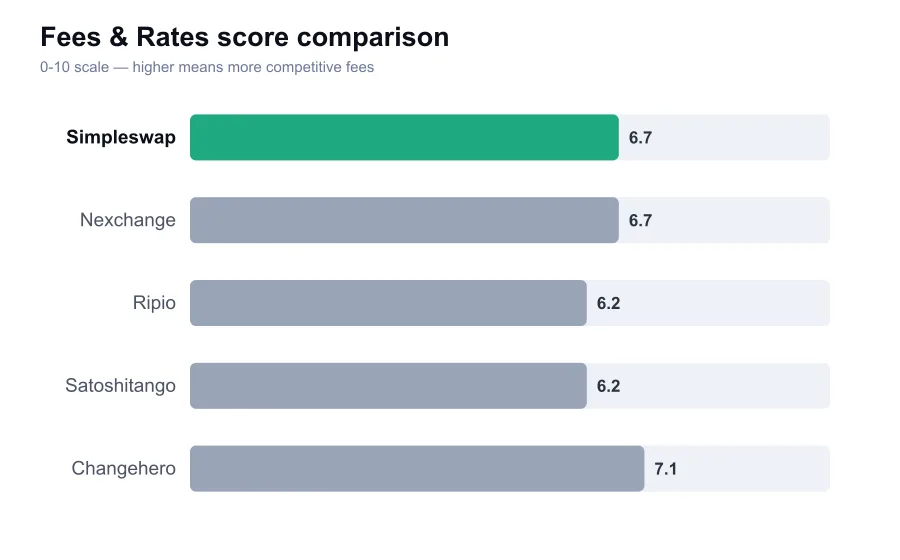
Fees are SimpleSwap's biggest area for scrutiny. It does not work like an exchange that publishes a simple 0.10 percent maker fee and 0.20 percent taker fee. The rate shown to the user generally incorporates liquidity-provider costs, a service margin, and network expenses. That is a normal instant-swap model, but it makes headline comparisons difficult. Users should judge it by the final number of coins expected in their wallet, not by marketing language about low fees.
For a small, occasional conversion, the convenience premium can be fair. For a large swap, it can be expensive. I would always open at least two other quote tools, perhaps ChangeNOW, StealthEX, Changelly, or a direct decentralized exchange where appropriate, and compare the output after all costs. On highly liquid assets, a standard exchange may deliver a noticeably better result even after a deposit and withdrawal fee. SimpleSwap is rarely the obvious choice for a high-frequency trader.
The fixed-rate option is useful but not a free lunch. A fixed exchange rate can reduce the anxiety of watching a volatile market move while bitcoin confirms, and it gives users a clearer expectation of what will arrive. The quoted rate may be less favorable than the floating option because the provider is taking on market risk. Floating-rate orders can provide a better starting quote, but the received amount can change as the transaction waits for confirmations.
Speed is usually good for an instant exchange, provided the sending network is normal and the selected route has liquidity. A fast-chain stablecoin swap may complete in minutes. Bitcoin and Ethereum transactions naturally take longer, especially when the sender uses a low network fee or the chain is congested. SimpleSwap cannot make a slow first-leg deposit confirm faster, so users should separate blockchain timing from service timing before blaming the platform.
Order tracking is one of the useful practical features. Users receive a status page that shows stages such as waiting for deposit, confirming, exchanging, and sending. Save that link and the transaction hashes. It is essential evidence if support needs to investigate a delayed order. The same advice applies to every instant exchanger, but it matters more here because there is no familiar account dashboard with an extensive transaction history unless the user has separately created an account.
SimpleSwap is commonly described as noncustodial because it does not keep a standing customer balance in the normal course of a swap. That is broadly fair, but the word should not be exaggerated. The service receives the deposit, processes the conversion through its route, and sends an output transaction. Funds are in transit under the service's process. It is safer to think of SimpleSwap as an exchange with temporary transaction custody rather than as a pure peer-to-peer protocol.
KYC is another area where the advertising shorthand can mislead. SimpleSwap does not ordinarily require every user to register and complete identity verification before making a swap. Yet it reserves the ability to request KYC or compliance information where risk controls require it. A transaction can therefore be paused for review. Anyone for whom an identity request would be unacceptable should not assume that an initial no-registration screen creates a contractual guarantee of anonymity.
That policy is frustrating, but it is no longer unusual. Instant exchanges must deal with sanctions screening, fraud, stolen funds, and liquidity partners with their own compliance obligations. The fair criticism is not that such controls exist. The fair criticism is that users need clear communication about what happens to funds during a review, what documents could be required, and what refund path exists if verification is not completed. Read the current terms before sending a large amount.
Security on the user side is mostly operational. Verify the official simpleswap.io domain, use a private and updated device, double-check every recipient address, and confirm the correct network for tokens such as USDT. Do not trust a token ticker alone, because the same ticker can exist on multiple chains. If a wallet supports address whitelisting or address-book labels, use them. A test swap may cost a few dollars, but it is cheap insurance before committing a large amount.
SimpleSwap has a more visible reputation than many smaller instant swap sites. It has operated for years, maintains an active public presence, and is widely mentioned in comparison articles and user reviews. That familiarity is a positive, not proof that every experience will be perfect. Public feedback includes successful fast swaps as well as reports of delays, rate differences, and compliance-related holds. This is a business where the unhappy cases are often the ones users remember most, so independent review patterns matter.
Support is available through online channels and can be helpful when an order is technically delayed or a transaction hash needs tracing. The team cannot undo a completed transfer to a wrong address, and it cannot always instantly resolve a hold imposed by a partner or risk process. Response quality appears most important during those exceptions. For routine swaps, the service is designed to be self-serve. For complex problems, users should expect ticket-based communication rather than a phone call.
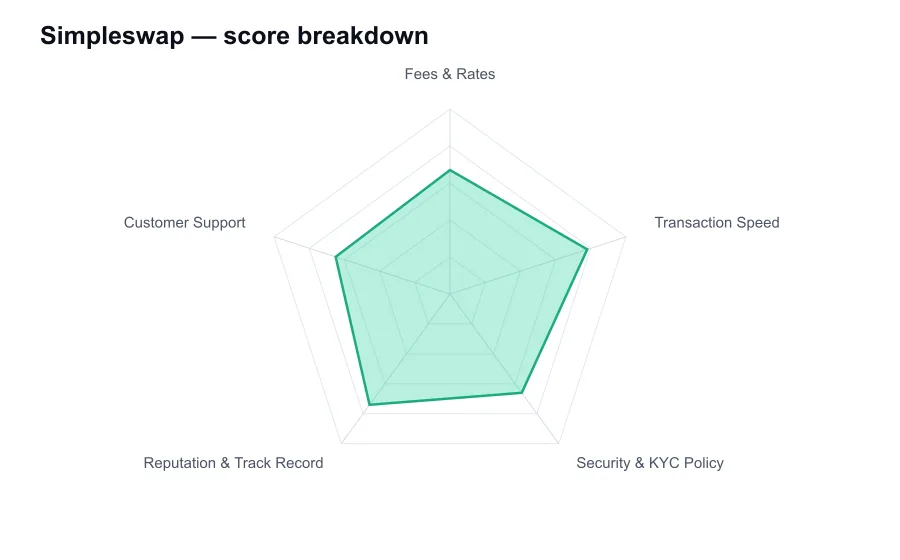
SimpleSwap is a solid convenience tool, not a universal best buy. It is appropriate for users who control their own wallets, understand the difference between a fixed and floating quote, and need access to a broad asset menu without opening another major exchange account. It is less suitable for newcomers moving meaningful savings for the first time, people who need fiat deposits, or traders focused on every basis point of execution. The easy interface does not remove the irreversible nature of crypto transfers.
My final view is moderately favorable. SimpleSwap has enough operating history and market recognition to be more credible than an unknown swap widget, and its broad coverage remains useful. The trade-off is a familiar one: convenience, no routine account setup, and wide token access in exchange for less transparent all-in pricing and the possibility of conditional KYC. Compare quotes, keep your transaction records, and test the route before a substantial transfer. Used with those habits, it is a practical service rather than a risky shortcut.