111Obmen is a small, Russian language oriented instant exchange service, the sort of provider many people find through monitoring sites rather than through a well known consumer brand. Its proposition is straightforward: send one asset, receive another, and avoid the account infrastructure of a major centralized exchange. That has genuine appeal for a one-off swap, particularly for users moving between crypto and regional payment methods. It is not a venue I'd treat like Binance, Kraken, or even a mature non-custodial swap platform.
The first issue is transparency. 111Obmen does not have the depth of public corporate reporting, independently audited reserves, or extensive technical documentation that serious users can inspect at established exchanges. A clean interface and a listed rate are not substitutes for those things. Smaller exchangers can work perfectly well for modest conversions, but the user is accepting meaningful operator risk every time funds leave their wallet.
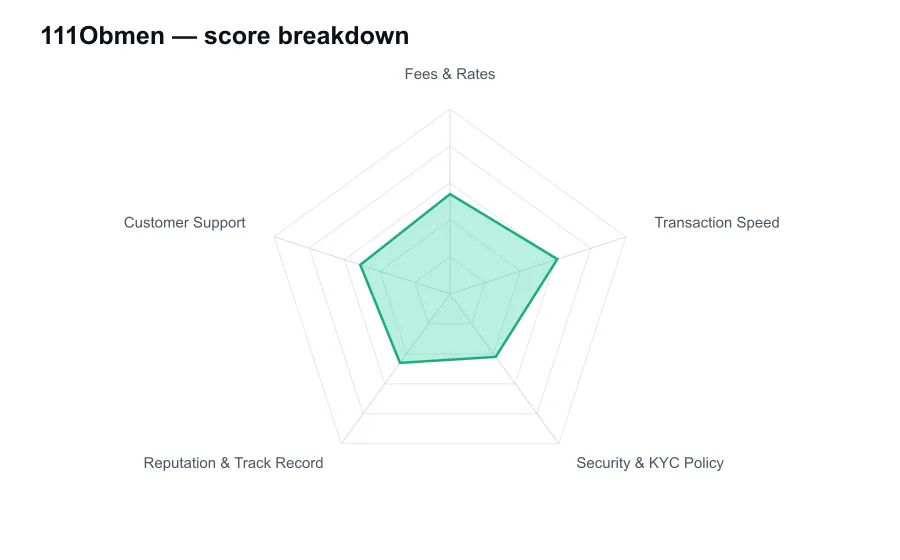
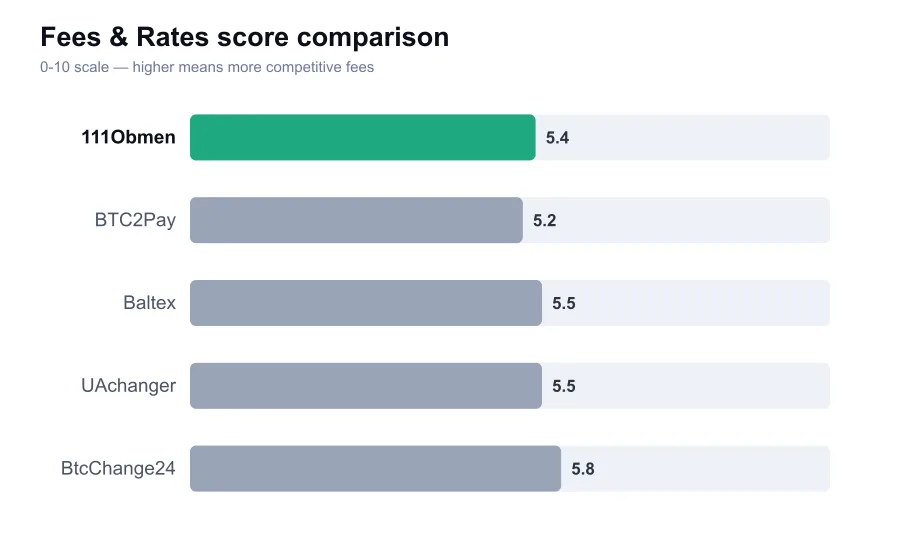
Pricing is rate based rather than presented as a simple, universally published trading fee. The cost of a swap is normally embedded in the quoted exchange rate, alongside network fees and the service's liquidity margin. That is common among instant exchangers, but it makes comparison harder. A rate that looks attractive before a transaction may be less competitive after the receiving amount, minimum limits, and blockchain fee are all considered.
For a small order, that lack of a separate fee line may not matter much. For a larger conversion, it absolutely does. I would compare the final amount against at least two alternatives on a monitoring site and against a liquid exchange's spot price before paying. The gap can widen sharply on less liquid coins, bank transfer routes, and transactions outside normal Russian business hours. Anyone expecting the spread of a deep order book will be disappointed.
Speed depends heavily on the payment rail and the asset being exchanged. Crypto to crypto orders can be relatively quick once the deposit has enough confirmations and the operator has source liquidity available. Bitcoin deposits are naturally slower than Tron or other fast, low cost networks. Fiat-linked directions can take longer because an operator may need to verify that an incoming payment has settled before releasing the outgoing side.
That operating model creates a practical difference between an advertised automatic exchange and a truly automated protocol. An order can appear simple on screen, then move into manual handling because of a delayed payment, an incorrect memo, or an amount that differs from the invoice. Users should retain the order number, transaction hash, screenshots of payment confirmation, and the exact receiving address until everything is complete. That is not paranoia, it is basic discipline with small exchangers.
The KYC position needs careful reading on every order. Services in this category often market themselves as having no routine registration, but reserve the right to ask for identification or source-of-funds information if their risk system flags a transaction. Those checks can be triggered by blockchain analytics, unusual amounts, a mismatch in payment details, or coins associated with suspicious activity. No signup requirement is not the same thing as a guarantee of anonymity.
That conditional compliance approach can be uncomfortable. If a transaction is paused after funds arrive, the customer may have little leverage and limited clarity about timing. Larger regulated exchanges are more demanding up front, but their policies, legal entities, and escalation paths are generally easier to identify. With 111Obmen, I would never send money that I urgently need for a bill, a liquidation deadline, or an exchange withdrawal window.
Security is also partly in the user's hands. Confirm the destination address character by character, use a private device, and beware of cloned pages promoted through search advertising or Telegram. Small exchange brands are frequent targets for impersonation because customers are accustomed to support chats and manual order resolution. A genuine operator cannot reverse an on-chain transfer sent to an attacker, regardless of how persuasive the follow-up conversation sounds.
Its public reputation is modest rather than deeply established. Listings and customer comments on exchange-monitoring platforms can provide useful signals, especially if they show years of activity and resolved complaints, but they are not equivalent to audited operational history. I place more weight on the pattern of disputes than a headline rating. Delayed orders happen. An exchanger's response to a delayed order is what reveals whether it has competent operations.
Support is likely to be one of the deciding factors for this service. The practical expectation is chat or ticket-based help tied to an order number, not a round-the-clock phone desk with a formal complaints department. That can be sufficient for an ordinary swap. It is much less reassuring when a large transfer is frozen or a payment provider disputes an incoming transaction. The language and working hours may also be a poor fit for international users.
There is a sensible way to use 111Obmen. Start with a small test exchange, use a direction with a clear and competitive net quote, and wait for the full cycle to complete before committing a larger amount. Do not split a major transfer into several orders unless support specifically confirms how they will be handled. Fragmented payments and altered amounts are common reasons for manual review.
I would also avoid treating an exchanger account, if one is offered, as a wallet. Receive the asset into a wallet you control or move it promptly to a reputable platform. The service's job is conversion, not long-term custody. That distinction matters most during chain congestion, market stress, or any incident that makes a small operator temporarily unable to source the quoted asset.
111Obmen can be useful as a practical regional exchange option for careful users who understand rate shopping and transaction risk. It does not earn the trust reserved for transparent, regulated, or technically auditable platforms. The appealing part is convenience and a potentially good quote on a specific route. The uncomfortable part is that a customer has to do much more due diligence than the polished exchange screen suggests.