UAchanger sits in the Ukrainian crypto-exchange niche rather than the global trading-platform market. It is aimed at people who want to swap currencies quickly, often with a local payment method or bank card, without learning order books, funding a trading account, or dealing with a complex terminal. That focus is useful, but it also means customers need to judge it by the standards of an exchanger, not by comparing it directly with a major regulated exchange such as Kraken or Coinbase.
The service's appeal is straightforward. You select a direction, enter an amount, provide receiving details, and pay. For a user converting USDT into hryvnia or moving between common electronic-payment systems, that is a much more approachable experience than placing trades on an exchange. The problem is that convenience can conceal the real cost of the transaction. The quoted rate is the important figure, not a marketing claim about low commission.
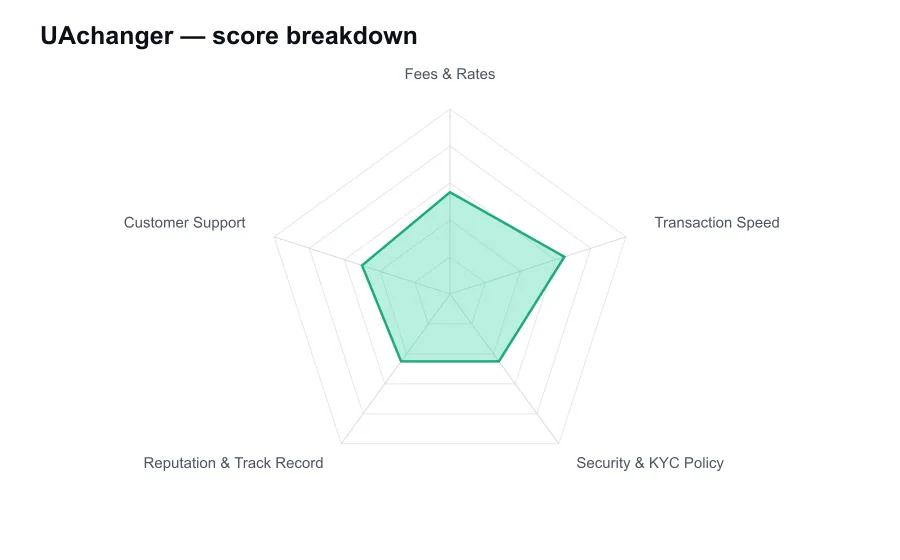
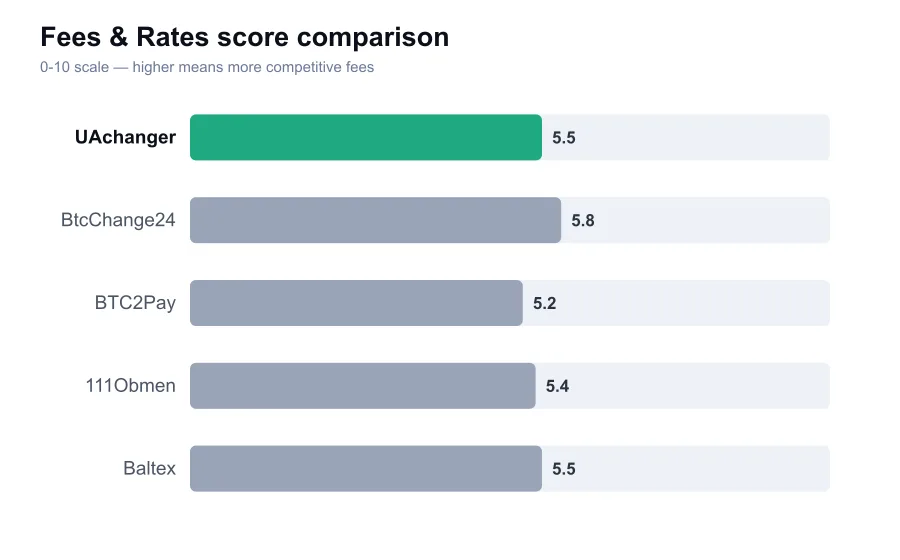
UAchanger does not present the kind of universally simple fee schedule that active traders get from large exchanges. Its margin is generally incorporated into the exchange rate, and the economics can vary materially by currency pair, reserve availability, payment rail, and transaction size. That is normal for a small exchanger, but it demands discipline from the buyer. Compare the final amount you will receive with at least two competing services before sending money.
For modest transactions, the price can be acceptable because a quick conversion has value. For larger transfers, even a small difference between the market rate and the offered rate becomes expensive. A spread of one or two percent is easy to miss while looking at a clean checkout screen. It is much harder to ignore on a five-figure conversion. I would not use this kind of service blindly for a major treasury move.
Speed is one of UAchanger's stronger selling points, provided both sides of the transaction are uncomplicated. Crypto deposits can be processed after the required blockchain confirmations, while card or payment-system transfers depend on the underlying provider's checks. Many routine exchange orders in this category complete within minutes to an hour. That is fast enough for everyday conversions, though it is not the same as instant settlement.
The important caveat is that manual review changes the experience completely. A mismatched sender name, an unusually large amount, incomplete payment proof, or a blockchain transaction with a low fee can turn a quick order into a support case. The site may be available around the clock, but that does not guarantee every order receives immediate human attention. Anyone facing a strict payment deadline should leave a buffer.
Security is the area where UAchanger deserves more skepticism than a large licensed exchange. A simple exchanger may not hold balances like a custodial trading venue, which reduces some exposure, but customers still send funds first and must trust the operator to complete the other side. Publicly visible operational information, company disclosures, and independently auditable security controls matter a lot here. They are not as extensive as the disclosures available from leading international platforms.
KYC policy should also be read carefully rather than inferred from an apparently easy order form. Small exchangers often allow low-friction transactions in ordinary cases but reserve the right to request identification, source-of-funds information, or payment verification if monitoring flags an order. That can be reasonable for anti-fraud compliance. It is frustrating only when users assume no verification is possible and commit funds before reading the rules.
I would treat UAchanger as a transaction service, not a wallet. Do not leave money sitting in an account if the service permits it. Confirm the receiving wallet address character by character, use a fresh browser session on a secure device, and keep screenshots of the order, payment reference, and correspondence. These are basic precautions, yet they matter more with a small exchange desk than with a major platform that has a mature account-recovery process.
Its reputation appears to be rooted primarily in regional usage and exchanger-monitoring listings rather than broad global brand recognition. That is not a disqualifier. Plenty of useful local exchange services never become household names outside their market. Still, a long list of generic review snippets should not carry the same weight as a transparent operating history, clear legal identity, and years of independently documented customer experience.
The best way to assess it is with a small test transaction. Check whether the displayed rate survives until payment, whether the order status updates sensibly, and whether the received amount matches the promised figure. If that first experience is clean, it gives you better evidence than a star rating. If the service asks for documents after funds are sent, follow the stated procedure but avoid escalating the transaction size until the process is resolved.
Support is likely adequate for routine questions but does not appear to offer the deep self-service tooling of a large exchange. A chat channel or ticket route can be enough for an ordinary order issue. It is less reassuring for disputes involving a bank reversal, a typo in a recipient address, or a compliance hold. Response quality matters more than the presence of a chat icon, and users should save the full conversation.
UAchanger is most sensible for someone who already understands the risks of exchange desks and needs a simple one-off conversion involving supported Ukrainian or crypto payment methods. It is not the place I would choose for recurring professional trading, long-term custody, or a very large conversion where regulatory protections and liquidity depth matter more than a streamlined form. Its job is narrow, and it should be used narrowly.
My view is cautious rather than hostile. UAchanger can be practical for a small, well-checked exchange, especially where local rails make bigger platforms awkward. Its speed and simplicity are real advantages. The lack of the transparency, institutional reputation, and published fee clarity expected from top-tier exchanges keeps the score down. Test it first, compare the net quote, and never confuse a convenient exchanger with a full-service financial institution.