BtcChange24 is the kind of small online exchanger that occupies a very specific corner of the crypto market. It is not trying to be a global venue for traders, nor does it offer the deep liquidity, regulatory profile, or broad product range of a mainstream exchange. Its appeal is the familiar exchanger model, choose a direction, provide payment and payout details, send funds, and receive the selected currency or payment method on the other side.
That model can be genuinely useful. Many people do not need a portfolio dashboard or twenty order types. They need to turn one asset into another, perhaps convert crypto to a local payment rail, or complete a straightforward exchange without registering at a large platform. BtcChange24's practical value depends heavily on the exact direction selected. The experience, rate, reserve, and processing time can vary much more than users expect from one pair to the next.
The first thing I would check is reserve availability. Smaller exchangers often list many directions, but the real capacity behind each one is not always equal. A route involving Bitcoin, USDT, or a common bank transfer may be relatively routine. A less common e-currency, regional payment method, or low-volume altcoin can require manual processing or be subject to a lower maximum. Never assume that a displayed direction means a large transaction can be completed immediately.
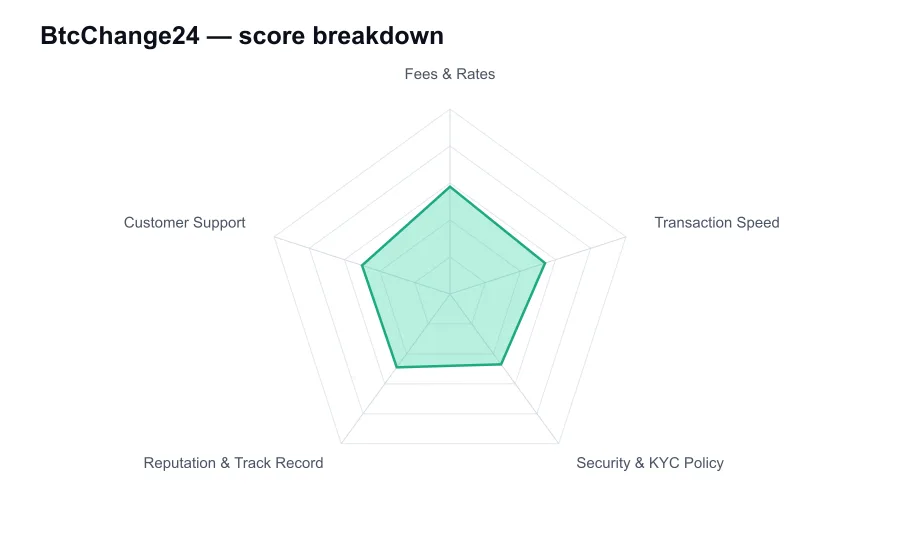
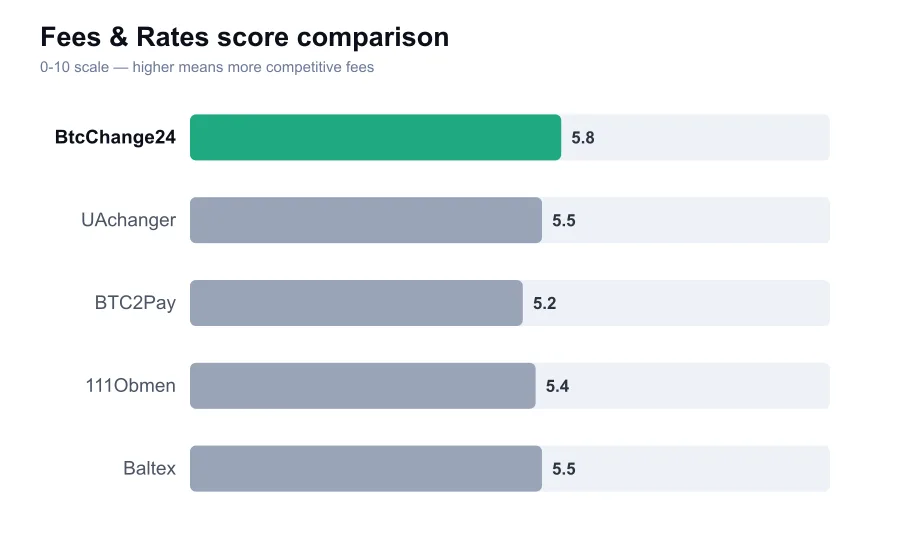
BtcChange24's pricing is quote-based, which is normal for this category but less transparent than a published maker and taker schedule. The quoted exchange rate is where the service earns its margin, alongside any network expense and payment-rail cost built into the transaction. A customer should judge the service by the net output, not by a claim of low fees. A small spread on the input side can become a noticeable difference once the final payout is calculated.
That does not make the platform automatically poor value. Quote-based exchangers can be competitive on a route that a major exchange does not support cleanly, especially where fiat payment options are involved. But users should compare at least two alternatives. BestChange-style monitoring pages can help identify available offers, although a monitor listing is not an endorsement and does not remove the need to inspect the exchanger's own terms, minimums, reserve status, and review pattern.
Speed depends on what BtcChange24 has to do behind the scenes. Crypto-to-crypto exchanges can be relatively quick after the incoming transaction receives the required confirmations. Bank-linked directions are more variable. Payment processors, manual review, banking hours, and fraud controls can all add time, particularly for a first order. A service that says it processes orders quickly may still be unable to control a delayed bank transfer or a congested Bitcoin transaction.
Users should read the order instructions before creating payment, not after. Exchange directions often require exact payment amounts, specific references, or a particular network. Sending the wrong amount, omitting a memo, or sending USDT on the wrong chain can turn a simple swap into a support case. That is not unique to BtcChange24, but small exchangers rarely have the automation and recovery teams that larger platforms use to resolve such mistakes quickly.
The privacy pitch around exchangers also needs a reality check. Some orders may be possible with limited registration, but that is not the same as a permanent no-KYC promise. Services can request identity documents, payment proof, or source-of-funds information where transaction monitoring or payment partners require it. Bank and card-related routes are particularly likely to involve checks. If a user regards any verification request as unacceptable, they should avoid third-party conversion services rather than assuming a small exchanger is exempt from compliance.
Security is not just about whether the website has HTTPS and a password field. The more important questions are who operates the service, whether its terms explain dispute handling, how it identifies orders, and whether it has a credible record of resolving mistakes. BtcChange24 does not offer the sort of public proof-of-reserves, audited controls, or detailed security documentation that a large custodian might provide. That should lead to conservative behavior, not panic, but it absolutely should affect transaction size.
Its reputation is best described as niche and difficult to independently verify at the standard I would want for a primary financial provider. A few positive comments, a listing on a monitoring site, or an old domain can be useful signals, but none proves that every order will be smooth. Public review sites can contain incentives, affiliate activity, and unresolved context. Read the lower ratings as carefully as the praise, especially complaints involving delayed payments, rate changes, or requests for documents.
Customer support is the decisive feature for an exchanger like this. During a normal transaction, users may never need it. During an abnormal one, support determines whether the experience becomes a short delay or a distressing dead end. BtcChange24 appears better approached as a service where a user keeps evidence from the start, including screenshots of the rate, order number, wallet transaction hash, and relevant payment receipt. That is simply good practice in this market.
I would not send money to an exchanger after finding it through an advertisement alone. Type the domain carefully, verify that the exchange page uses the expected domain, and be suspicious of lookalike support accounts in Telegram or social media. Crypto exchanger impersonation is common because a customer expecting a manual payment can be easier to mislead. The service's own support channel should be the only channel used for an order problem.
BtcChange24 makes more sense for a person with a specific supported route than for someone casually shopping for the best crypto platform. If the quote is competitive, the reserve is clearly adequate, and the first test succeeds, it can fill a practical gap. Its usefulness falls sharply for large transactions, urgent payments, and any user who needs the guarantees, compliance clarity, and institutional support of a recognized exchange.
My judgment is cautious. BtcChange24 may be perfectly serviceable for small exchanges, but it does not provide enough public assurance for blind trust. The rate can be the right reason to use an exchanger, provided the customer checks the net payout and follows the order instructions exactly. It is not a place where I would keep balances, and it is not where I would begin with a high-value transfer.