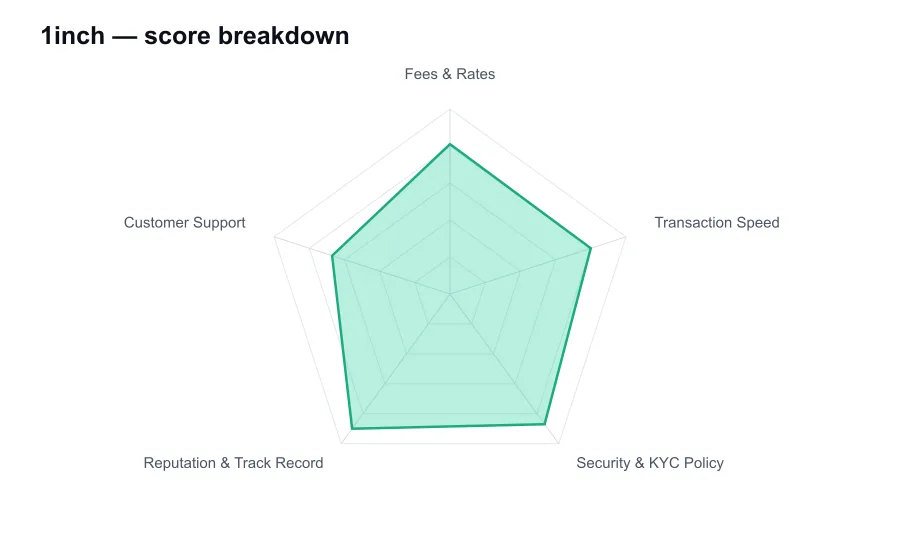
1inch is not a conventional crypto exchange and judging it by that standard misses the point. It is a decentralized exchange aggregator and routing layer, built to search liquidity across automated market makers, pools, and other sources on supported networks. Instead of depositing funds with 1inch, users connect a self-custody wallet and approve a smart-contract transaction. For DeFi users, that architecture is its biggest advantage and its most important source of risk.
The platform has grown into one of the most recognizable names in decentralized trading. Its aggregation engine can split a swap across several venues, seek routes with better execution, and account for available liquidity rather than blindly sending the whole trade to one pool. That is valuable on Ethereum and on networks where fragmented liquidity can make a simple swap surprisingly expensive. It is far more sophisticated than using a single DEX interface.
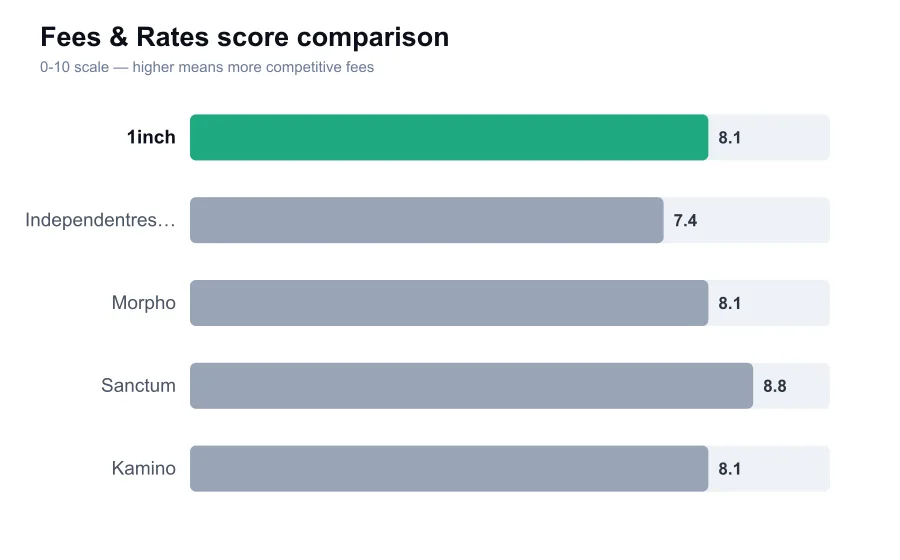
Fees need a careful explanation. 1inch generally does not charge a standard platform fee on ordinary swaps in the way a centralized exchange charges maker and taker fees. The user pays the underlying protocol costs, liquidity-provider fees embedded in the route, price impact, and the network gas fee. The absence of a visible 0.1 percent trading fee does not mean a trade is free. On Ethereum, gas alone can dominate a small transaction.
The route shown before confirmation is the number that matters. 1inch displays the expected output, estimated gas, price impact, and minimum received based on slippage settings. That is a better disclosure model than many instant exchangers use, but users still need to understand it. A cheap looking token swap can become costly after approval gas, execution gas, and the spread between the token's apparent price and realizable liquidity are counted.
For liquid pairs on a low-fee network, execution can be excellent. 1inch's Pathfinder routing logic is designed to find efficient paths through multiple sources, and it frequently produces better results than manually choosing one popular pool. That edge is most meaningful on trades large enough for route selection to matter, but not so large that the market is inherently illiquid. Comparing the final quote with Uniswap, CoW Swap, and a centralized exchange remains sensible.
Speed is fundamentally blockchain speed. A swap on a fast chain may settle in seconds after wallet confirmation. Ethereum mainnet can take minutes, especially if gas settings are conservative or network demand jumps. 1inch cannot make a block producer include a transaction faster. Its role is to construct and submit a route, then the chain decides the actual settlement time.
The Fusion feature changes that experience for supported swaps. Rather than asking a user to submit a conventional on-chain swap directly, Fusion uses intent-based orders that resolvers fill. This can offer gasless user-facing execution and protection against certain forms of harmful maximal extractable value, with the trade-off that filling depends on resolver interest and the stated conditions. It is a smart tool, but it is not magic. An unattractive limit may wait or never fill.
Self-custody is the core security benefit. 1inch does not hold the private keys to a connected MetaMask, Ledger, Rabby, or compatible wallet. There is no centralized withdrawal queue to freeze and no exchange balance for a hacker to drain from the platform's account database. Users retain control until they sign an approval or swap. That structure is far preferable to leaving trading capital indefinitely on a lightly regulated custodian.
It also shifts responsibility directly to the user. Approving a malicious token, signing a deceptive transaction, using a fake front end, or granting an unlimited allowance can cause a loss that no support agent can undo. Wallet prompts are not legal paperwork to click through. Read the spending token, spender address, receiving amount, and network every time. Revoke old allowances periodically, particularly after experimenting with obscure tokens or third-party DeFi applications.
1inch does not generally impose account-level KYC for a normal self-custody swap. That does not mean DeFi operates outside every compliance boundary. The interface may restrict access based on jurisdiction, wallet providers and fiat on-ramps have their own requirements, and sanctioned or high-risk addresses can encounter limitations. Users seeking total anonymity should not confuse a non-custodial front end with invisibility on a public blockchain.
The project's reputation is strong by DeFi standards. 1inch has operated through multiple market cycles, has a visible development organization, extensive documentation, public smart-contract infrastructure, and a large user base. Its 1INCH token and DAO governance do not eliminate risk, but they make the project far more inspectable than anonymous swap sites. Security audits, bug bounty activity, and open contract verification matter here, even though no audit guarantees safety.
Support is competent for a decentralized product but not personal concierge service. Documentation, help resources, community channels, and transaction-specific troubleshooting can solve many issues. They cannot reverse a confirmed transaction, retrieve a seed phrase, or compel a validator to include a failed trade. That hard limit frustrates newcomers, yet it is inherent to self-custody rather than evidence of poor customer care.
The interface is approachable enough for a confident wallet user, but I would not call it beginner-proof. Network selection, gas assets, token approvals, bridges, slippage, and scam token lookalikes create plenty of room for expensive mistakes. A user who has never managed a wallet should first practice with a small amount on a low-fee network. The right first trade is a boring, liquid pair, not a newly launched microcap.
My view is that 1inch remains one of the best tools for decentralized spot execution, especially for users who value self-custody and want competition among liquidity sources. It is not the cheapest choice for every trade, and it is not a substitute for a regulated fiat exchange. But its routing quality, mature ecosystem, and non-custodial design place it comfortably ahead of most instant-swap brands. Use it deliberately, check the quote, and keep wallet security habits sharp.