Liquity is not an instant crypto exchange in the Kingex or LetsExchange sense. It is a decentralized borrowing protocol, originally built around borrowing the LUSD stablecoin against ETH collateral and later expanded through Liquity V2's BOLD stablecoin system. That difference changes how it should be judged. You are not simply exchanging one coin for another. You are opening a collateralized debt position, taking market risk on ETH, and interacting directly with smart contracts.
The protocol occupies a distinctive place in decentralized finance because it tried to make borrowing simpler and more predictable than many lending markets. The original Liquity design allowed users to deposit ETH and borrow LUSD with no recurring interest rate, subject instead to a one-time borrowing fee that moved with the protocol's redemption activity. That was a sharp contrast with Aave or Compound, where variable borrowing rates can change dramatically as utilization rises.
A zero-interest loan sounds irresistible, but it should not be mistaken for free money. Borrowers paid an upfront fee, usually described through the protocol's base rate, and needed to maintain a collateral ratio safely above the liquidation threshold. The original system required at least 110 percent collateralization, a level that may look efficient but leaves little room for an asset as volatile as ETH. Borrowing near that limit is not sophisticated capital management. It is a liquidation wager.
Liquity V2 changes the structure in important ways. The BOLD system supports ETH and selected liquid staking token collateral markets, while borrowers choose their own annual interest rate within the protocol's mechanics. That gives users more control, but it also makes position management less passive. A borrower cannot simply open a vault and forget it. Interest, collateral ratio, redemption exposure, and the behavior of other borrowers all matter.
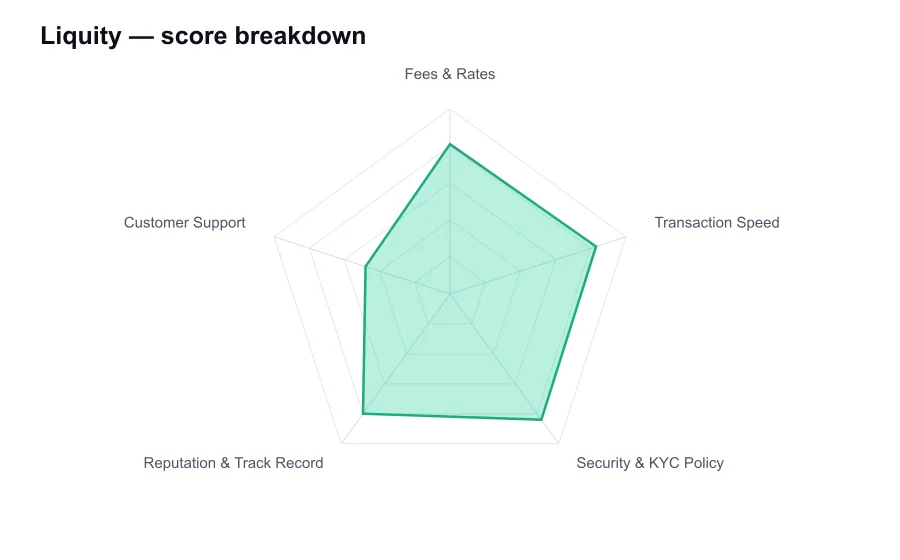
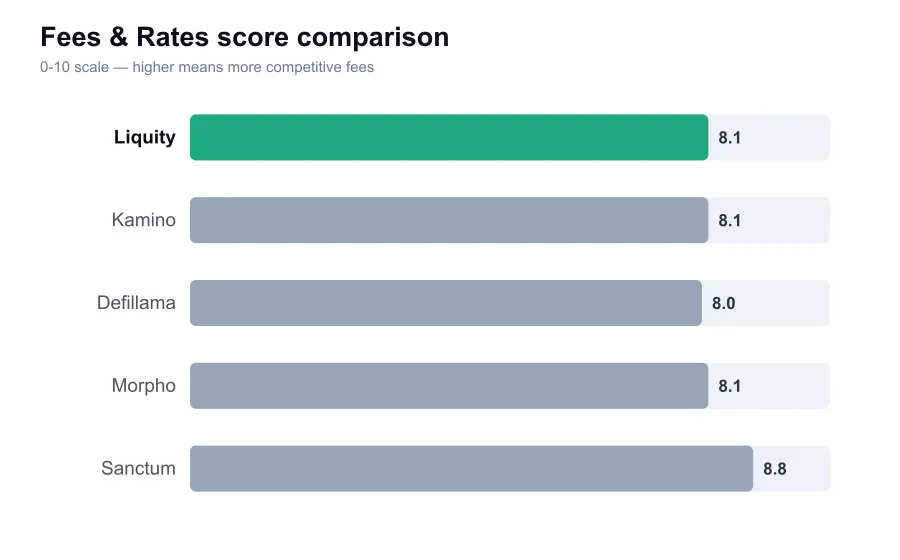
Fees are one of Liquity's genuine strengths, provided users understand their shape. There is no centralized exchange commission and no account fee. Protocol charges arise from borrowing, interest in the newer architecture, redemptions, and Ethereum gas. The Ethereum transaction cost can be trivial during quiet periods or painfully large during congestion. For a small loan, gas can dominate the economics. Liquity is far more rational for positions large enough to absorb on-chain costs.
The original LUSD borrowing fee was algorithmic, with a minimum fee and a base rate that could rise after redemptions. This was clever because it connected stablecoin demand and repayment incentives without relying on active monetary policy from a centralized issuer. It also meant users had to inspect the current fee before borrowing. Someone who remembers only the phrase zero percent interest can be surprised by the all-in cost at a particular moment.
BOLD's borrower-set interest rate introduces another kind of decision. Paying a very low rate may appear efficient, but in a system with redemption mechanics it can leave a position more exposed than a borrower expects. Choosing a rate is not merely shopping for the cheapest credit. It is part of setting the priority and resilience of the position. Users who do not understand that relationship should use a simpler lending product or borrow much less than their maximum capacity.
Transaction speed is dictated by Ethereum and the collateral network, not by a support desk. A position can be opened as soon as a wallet transaction is confirmed, usually within seconds to several minutes depending on gas conditions. There is no human approval queue and no bank transfer settlement stage. That is excellent for permissionless access. It also means an accidental transaction, wrong setting, or poorly timed liquidation cannot be undone by sending a ticket to customer service.
The protocol's security model is unusually serious for DeFi. Liquity's smart contracts have been publicly scrutinized and audited, and the original protocol was deliberately designed with immutable core contracts and minimal governance intervention. That reduces governance capture risk and the chance of an admin changing lending rules overnight. It does not remove smart-contract risk, oracle risk, wallet risk, or the broader risk of Ethereum infrastructure. Immutable code can be reassuring and unforgiving at the same time.
Liquity relies on price feeds and liquidation mechanisms to maintain system solvency. In the original model, liquidations could feed ETH collateral into the Stability Pool, where LUSD depositors absorbed debt in exchange for discounted ETH and rewards. That is a compelling mechanism, but it is not a savings account. Stability Pool participants take exposure to liquidation events, ETH price changes, and protocol conditions. The word stable in stablecoin does not make every related strategy low risk.
KYC is not part of the core protocol. A user connects a self-custody wallet and interacts with contracts without supplying identity documents to Liquity. That is a meaningful privacy and accessibility benefit, especially compared with centralized lenders. It does not make the user's activity invisible. Ethereum transactions are public, and any centralized exchange or fiat gateway used before or after the interaction may impose its own identification requirements.
Liquity's reputation is strong among technically informed DeFi users. It has survived difficult market periods, has a recognizable design philosophy, and has influenced the broader stablecoin and lending conversation. The protocol's original LUSD model earned respect for avoiding a centralized issuer and for using ETH-backed debt rather than opaque reserve claims. But its public name recognition remains much smaller than Aave, Maker, or major exchanges, and its complexity is a barrier for newcomers.
The biggest practical danger is user behavior, not necessarily the interface. A person can open a position in minutes, see a healthy-looking collateral ratio, then watch that ratio deteriorate during a rapid ETH selloff. The safe ratio is not the minimum ratio. Conservative borrowers leave substantial headroom, monitor their positions, and hold assets ready to repay debt or add collateral. Anyone borrowing against ETH to buy more ETH should be especially honest about the leverage involved.
Support is the weakest category only because Liquity is a protocol rather than a staffed financial platform. Documentation, community channels, dashboards, and third-party interfaces can be helpful. There is no conventional customer-service agent who can reverse a liquidation, restore a compromised wallet, or negotiate a transaction error. That is not a defect hidden by the team. It is part of permissionless finance, and users need to accept it before they interact with the contracts.
Liquity is compelling for experienced DeFi participants who understand collateralized borrowing and want to retain ETH exposure while accessing on-chain liquidity. It is not a substitute for a cash loan, a savings account, or a beginner-friendly exchange. Its transparent rules and non-custodial design are real advantages, but they shift responsibility directly to the user. My view is favorable on the protocol's engineering and skeptical of casual use. Liquity is powerful precisely because it gives you few excuses after a bad decision.