DefiLlama is not an exchange in the conventional sense, and judging it as one would miss what makes it useful. It is primarily DeFi's most widely used open analytics dashboard, tracking total value locked, yields, chains, stablecoins, bridges, hacks, governance activity, and protocol revenue. Its swap tools sit alongside that research layer. The product's real value is information and routing context, not custody or a branded trading venue.
That distinction matters immediately. DefiLlama does not operate like Coinbase, Kraken, or even an instant exchanger such as EasyBit. It does not take custody of a user balance, issue exchange accounts, or decide whether a withdrawal may leave. A swap initiated through its interface is executed through connected third-party decentralised exchange and aggregator infrastructure. The wallet signs the transaction, and the underlying route determines where assets actually travel.
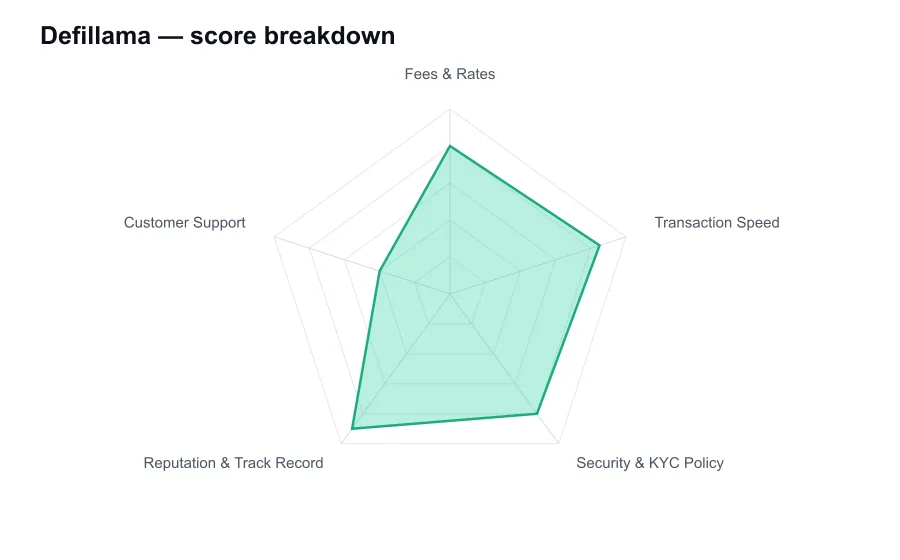
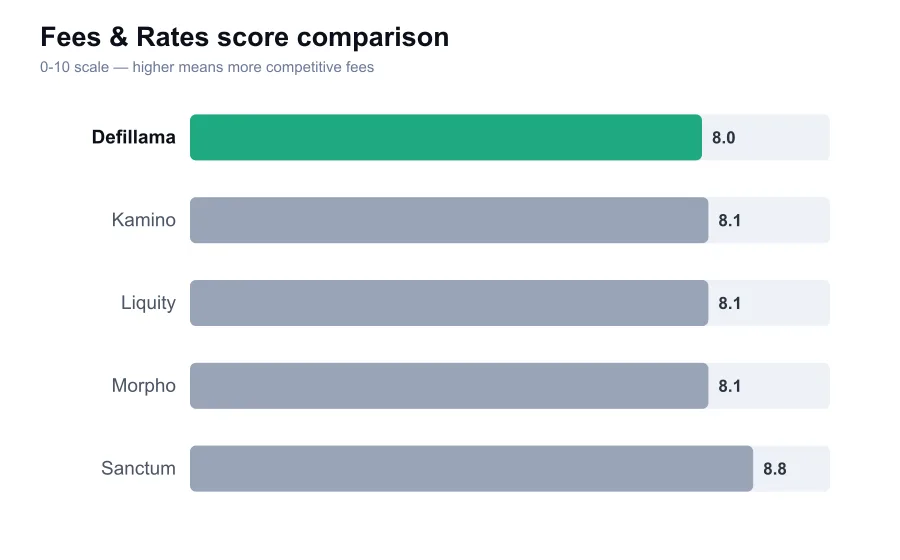
For fees, DefiLlama's appeal is that it has generally positioned its swap interface as a low-friction aggregator rather than another layer adding a large retail markup. The route can incorporate DEX liquidity and aggregators, so the cost shown to the user is made up of the underlying venue fees, price impact, gas, and any route-specific economics. A user should inspect the quote, because there is no single flat rate that applies to every chain and token pair.
This can be cheaper than fixed-spread instant-swap services, especially for on-chain assets with deep liquidity. It can also be cheaper than placing an uninformed trade directly on one DEX, because a route finder may split liquidity or select a better pool. But there is no magic. Aggregation cannot remove AMM fees, Ethereum gas, or a thin market's slippage. If a token is illiquid, the clean-looking interface does not turn it into a cheap trade.
The best habit is to treat DefiLlama's quote as one serious data point. Check the quoted output against a wallet aggregator, 1inch, CoW Swap where available, and the native DEX holding the strongest pool. A modest difference in execution may matter more than a stated fee percentage. Sophisticated users also check whether the route invokes unfamiliar contracts, whether the approval is unlimited, and whether the output token is the authentic asset.
Transaction speed is usually very good because there is no manual exchange desk in the middle. A swap executes at blockchain speed after the user signs. On Base, Arbitrum, Optimism, Solana, or other fast low-cost networks, that can feel immediate. Ethereum mainnet remains different. A transaction can wait in the mempool, require a gas replacement, or cost more than the trade deserves, and no analytics platform can solve that underlying network constraint.
There is another kind of speed where DefiLlama excels: research. Its dashboards make it quick to see whether a protocol's TVL is growing, where yields are coming from, how stablecoin supply has changed, or whether a chain's activity is largely one incentive programme. That is invaluable before bridging funds or providing liquidity. Many users make expensive DeFi mistakes because they swap first and investigate later. DefiLlama encourages the reverse order.
Security is strong in one limited but important sense. DefiLlama is non-custodial. It does not hold a private key to a user wallet or maintain a pooled customer balance that could be lost in an insolvency. It has built a reputation around public data, transparent methodology, and a community-minded approach to DeFi research. Its interface can reduce blind trust in promotional claims because it puts protocols in a broader market context.
But a non-custodial interface is not a security guarantee. The final risk belongs to the chain, wallet, token approval, smart contracts, bridge, and liquidity source selected for the trade. DefiLlama cannot reimburse a user who signs a malicious approval, sends tokens to the wrong address, or uses an unsafe pool. Anyone who expects a password reset, a chargeback, or an exchange-led investigation should not confuse a DeFi dashboard with a regulated broker.
KYC is not normally required to browse the platform or connect a self-custody wallet for decentralised activity. That is a feature for privacy-conscious users, but it also means responsibility stays with the user. Compliance requirements can arise from external fiat ramps, centralised partners, or local law, not from DefiLlama's basic analytics pages. Never assume that no platform KYC means a transaction has no tax, sanctions, or reporting implications.
DefiLlama's reputation is unusually strong for a data product in an industry full of opaque listings and paid rankings. It became a default reference point for DeFi TVL and protocol comparisons because it is broad, fast-moving, and often more candid than protocol marketing. The team and contributors have also shown a willingness to distinguish raw numbers from meaningful activity. Still, TVL is not a complete safety score. It can be inflated, borrowed, or incentive-driven.
Support is functional but light. Documentation, social channels, public issue reporting, and community discussion are more realistic avenues than a 24-hour account-support queue. That is acceptable for a free analytics product. It is not enough if a user makes a costly transaction mistake and expects urgent human intervention. The interface is best approached as professional-grade public tooling, not a concierge service.
DefiLlama is particularly good for people who want to understand the environment around a trade. Before moving stablecoins into a yield strategy, compare the protocol's TVL, chain exposure, revenue, historical hacks, and competing yields. Before using a bridge, look at its size and track record. The product earns trust by helping users ask better questions, though it cannot make the final judgment for them.
My take is that DefiLlama deserves a high reputation score and a cautious exchange score. As an analytics platform with optional swap routing, it is a valuable part of a serious DeFi workflow. As a replacement for a customer-supported exchange, it is plainly not suitable. Use it to research and compare, keep wallet permissions tight, and remember that the route and contracts behind a swap matter far more than the logo on the dashboard.