Kamino is not a conventional centralized crypto exchange. It is a Solana DeFi protocol that combines lending, borrowing, liquidity vaults, leverage tools, and swap routing into one application. That makes it more capable than a simple swap site, but also more demanding. Users are interacting with smart contracts, wallet approvals, oracle systems, liquidation rules, and Solana network conditions rather than handing funds to a support-led broker.
Its place in the market is closer to Marginfi, Save, Jupiter, and Solend than to Coinbase or Independent Reserve. The main appeal is capital efficiency. A user can deposit supported assets, earn lending yield, borrow against collateral, manage concentrated liquidity through automated vaults, or use leverage products without leaving the Solana ecosystem. That breadth is useful, but it is not beginner-friendly finance.
Kamino's lending markets are central to the product. Depositors supply assets to a pool and receive variable yield generated by borrowers. Borrowers post collateral and pay variable interest. Rates move with utilization, so they are not fixed savings rates. A displayed annual percentage yield can change rapidly during market stress or when a large borrower enters or exits a pool.
Borrowing has genuine utility for someone who wants liquidity without selling a long-term SOL, BTC, or stablecoin position. It also creates liquidation risk. If collateral falls relative to the borrowed amount, the protocol can liquidate part or all of the position according to its rules. The mistake many new DeFi users make is treating a healthy collateral ratio in a calm market as permanent. Crypto prices can move far faster than a user can react.
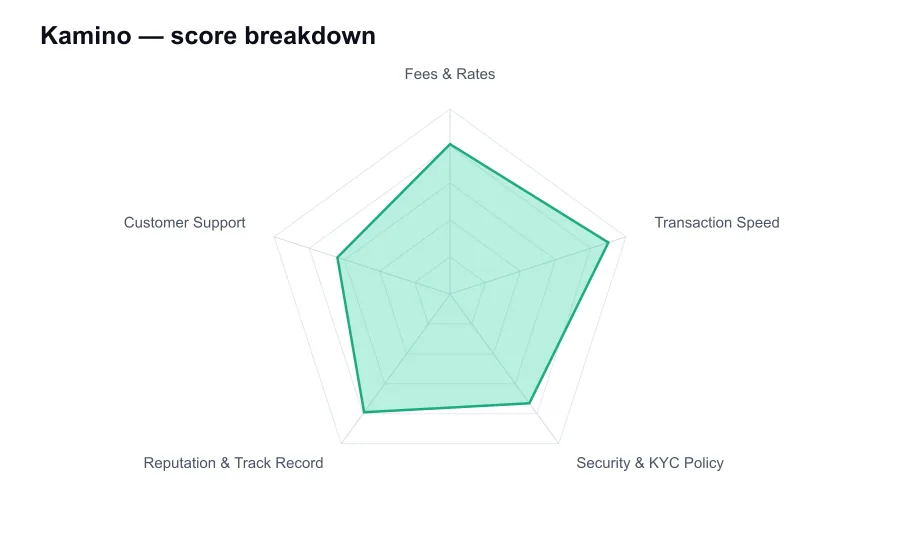
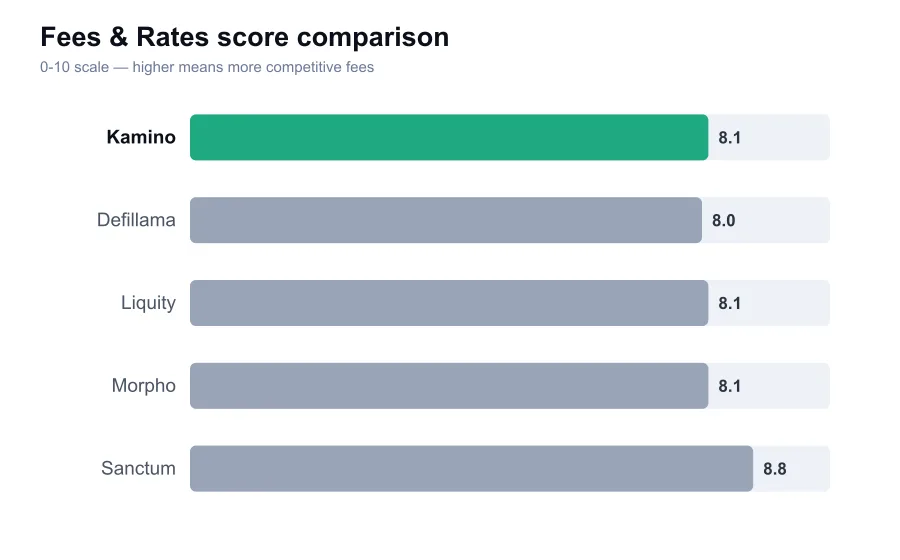
Kamino's fees are more nuanced than a single exchange commission. Lending and borrowing rates are dynamic. Vault strategies may take management or performance-related fees, swaps involve liquidity-provider and routing costs, and Solana network fees apply to transactions. Those network fees are usually tiny compared with Ethereum mainnet, which is one reason the protocol is attractive, but low network costs do not make leveraged DeFi cheap if a position is poorly structured.
For swaps, Kamino can be competitive because it operates in Solana's fast, low-cost environment and can route through connected liquidity. Still, users should inspect the quoted output and price impact. A transaction that looks nearly free in SOL fees can lose materially to slippage on a thin token. Jupiter often remains the benchmark for price discovery and routing on Solana, so it is sensible to compare a meaningful swap before executing.
Speed is one of Kamino's strengths. Solana transactions usually confirm quickly, and routine deposits, withdrawals, repayments, and swaps can feel close to instant when the network is healthy. That is a major contrast with Ethereum protocols during congestion. Yet users should remember that wallet signing, blockhash expiry, priority fees, and RPC reliability can still cause failed or delayed transactions. DeFi speed is excellent until the network is under strain.
The app is non-custodial in the sense that users connect a Solana wallet such as Phantom and authorize contract interactions. Kamino does not operate like an exchange holding a username and password account balance. That gives users more control, but it shifts responsibility to them. A compromised seed phrase, malicious wallet approval, or incorrect transaction cannot usually be repaired by opening a support ticket.
Security is serious but cannot be reduced to a badge saying audited. Kamino has undergone security reviews and operates in a sophisticated Solana DeFi environment, yet audits reduce risk rather than remove it. Smart contract bugs, oracle failures, governance mistakes, integration problems, and economic attacks remain possible. Anyone depositing meaningful funds should read the current documentation, examine the relevant market parameters, and understand that protocol risk is real.
The protocol also uses risk parameters that deserve more attention than marketing yields. Loan-to-value limits, liquidation thresholds, borrow caps, reserve configuration, and oracle sources determine how a position behaves under stress. A conservative user should borrow well below the maximum shown by the interface. Leaving a position near liquidation because the app says it is permitted is not a strategy, it is an invitation to be liquidated during a sharp move.
KYC is generally not part of the standard wallet-connected DeFi experience. That offers privacy and global access, but it does not exempt users from laws, tax reporting, sanctions rules, or the possibility that an interface may block certain jurisdictions. It also means there is no conventional account recovery. If someone loses access to a wallet, Kamino cannot reset a password or restore the funds.
Kamino has built a meaningful reputation in Solana DeFi, especially through its automated liquidity vaults and lending products. It is substantially more established than an anonymous new protocol, and it has been used through active Solana market cycles. Still, DeFi reputation should be treated differently from a bank's reputation. A protocol can be popular and technically impressive while its users remain exposed to market, smart contract, and liquidity risks.
Support is largely community and documentation driven. Expect guides, Discord discussion, announcements, and technical help rather than a call center that can reverse a transfer. The documentation is useful for users willing to read it, but the learning curve is real. If you need a human to guarantee a trade, pause a liquidation, or correct a wallet mistake, this is the wrong type of platform.
Kamino is excellent for an informed Solana user who understands collateral, price impact, wallet security, and the difference between yield and guaranteed interest. It is a poor choice for somebody whose first crypto purchase is still sitting on an exchange or who cannot afford a liquidation. The protocol's power is precisely what makes it dangerous in untrained hands. Used conservatively, it is one of Solana's more compelling DeFi toolkits.