Independent Reserve is one of the more established Australian cryptocurrency exchanges, founded in 2013 and built around a regulated, conservative model rather than the loud, high-risk culture that has defined parts of crypto. It serves Australian users particularly well, with an Australian dollar focus and local banking rails, while also operating in Singapore. It is not the exchange for every trader, but it has earned a place among the more credible regional platforms.
The company has always leaned into compliance. In Australia, it is registered with AUSTRAC as a digital currency exchange provider, and it has positioned itself for users who want a named business, conventional verification procedures, and accessible fiat on and off ramps. That isn't exciting, but after years of exchange failures, it is a much more valuable quality than a flashy token list.
The first practical advantage is Australian dollar funding. PayID, bank transfers, and local account processes make it much easier for Australians to move money than using an offshore exchange and hoping an international transfer behaves. Bank transfer timing still depends on the sending bank and anti-fraud checks, but PayID deposits can be fast. Fiat withdrawals are generally a much less mysterious process than they are at offshore platforms.
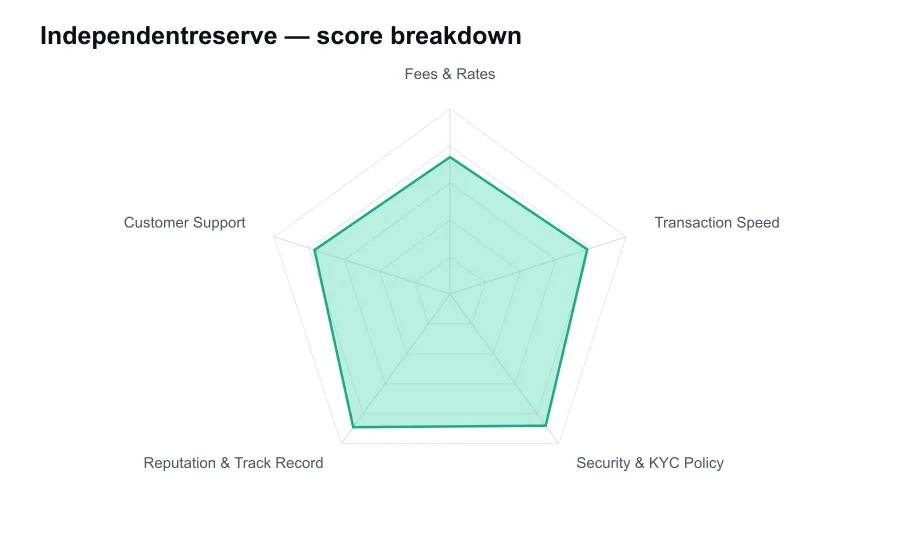
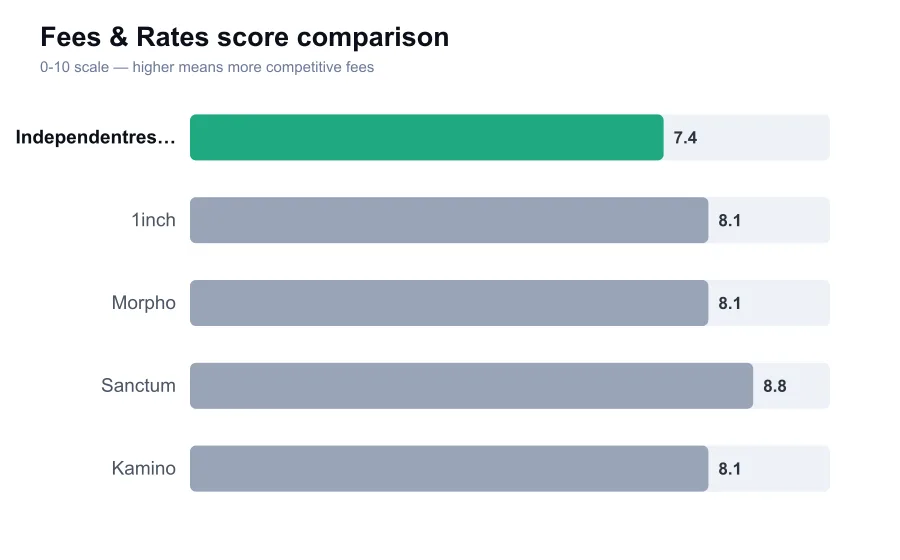
Its standard trading fee is competitive for a local regulated exchange, beginning around 0.5 percent and falling with 30-day trading volume, with lower tiers available to active users. That base rate is not the cheapest number in crypto. Global giants can charge less, especially for high-volume spot traders. But the comparison should include bank convenience, Australian dollar access, compliance reliability, and the cost of moving money between platforms.
Independent Reserve's fee approach is understandable rather than aggressively promotional. You can see the trading fee before placing an order, and the platform publishes withdrawal and deposit information. Crypto withdrawal charges vary by asset and network, as they should, so users need to check the current schedule instead of relying on an old review. There are also spreads to consider when using instant-style conversions rather than trading directly on the order book.
For modest investors buying Bitcoin, Ethereum, or a few major assets periodically, the fee structure is fair. For a day trader placing frequent small orders, 0.5 percent at the entry tier will feel expensive compared with Binance, Kraken Pro, or Coinbase Advanced. The platform does offer volume discounts, but Independent Reserve's natural customer is a serious investor or business, not somebody scalping altcoins all afternoon.
Trading is reliable on the core markets, though liquidity is not comparable with the largest international venues. Bitcoin and Ethereum pairs tend to be the easiest place to transact. Less popular assets can have wider spreads and thinner books, which makes limit orders sensible. The platform's order-book experience is far better suited to deliberate execution than a blind market order in an illiquid pair.
Transaction speed is solid in the areas the exchange controls. Internal order matching is quick, deposits are credited after the required blockchain confirmations, and Australian bank transfers can be efficient. External blockchain withdrawals remain subject to network congestion and security reviews. That is normal, not a flaw. I would rather an exchange apply sensible withdrawal safeguards than pretend every transfer is instantaneous.
Security is where Independent Reserve makes its strongest case. It has long promoted cold storage, multi-layer security controls, and a conservative operating posture. It also offers an optional Cryptocurrency Insurance feature for eligible assets, although customers should read the policy terms, limits, exclusions, and eligibility rather than assuming it covers every conceivable loss. Insurance is a useful layer, not a reason to abandon good personal security practices.
The exchange's verification requirements are meaningful. Users should expect KYC for fiat services and normal account use. Privacy maximalists will dislike that, but it is precisely what allows Independent Reserve to maintain banking relationships and operate in regulated markets. For people converting Australian dollars into crypto through a legitimate local business, clear KYC is preferable to the uncertainty of a platform that asks for documents only after freezing a withdrawal.
Independent Reserve has another advantage that small exchanges cannot manufacture quickly, a long operating history. Surviving since 2013 through several crypto cycles matters. It does not make the company invulnerable, and customers should still avoid treating any exchange as a wallet, but it provides more evidence than a new platform with polished branding and no track record.
The platform is particularly useful for self-managed super fund investors, family offices, and businesses that need statements, reporting, and a compliance-friendly counterparty. Its tax and reporting tools can reduce friction for Australian users, although nobody should mistake exchange reports for personalized tax advice. The exchange has also offered over-the-counter services for larger transactions, which can be helpful where order-book execution would cause avoidable slippage.
Customer support has a better reputation than anonymous offshore platforms, helped by its local market focus and established operations. Still, support is not magic. Verification, banking, and blockchain issues can take time, especially during busy market periods. Users should provide accurate documents, keep transaction records, and avoid waiting until a market panic to learn how their withdrawal settings work.
Independent Reserve is not the cheapest exchange, the widest marketplace, or the place to find every speculative new token. It is a grown-up Australian on-ramp with reasonable pricing, strong regulatory footing, and a history that carries real weight. For Australian investors who value dependable access to major crypto assets over casino-style features, that trade-off is easy to defend.