AvanChange is a small instant-exchange service aimed at people who want to swap one cryptocurrency for another without opening a full trading account. It sits in the crowded middle ground between large non-custodial swap aggregators such as ChangeNOW and SimpleSwap, and the smaller exchanger sites that often depend heavily on referral traffic from monitoring portals. That position makes it convenient for a quick one-off conversion, but it also means the service has less public depth than an established exchange.
The basic appeal is straightforward. You choose a pair, enter a receiving address, send funds, and wait for the converted asset to arrive. There is no order book to learn, no margin screen, and usually no need to maintain an account balance on the platform. For a user moving modest amounts of BTC, ETH, USDT, LTC, or another liquid asset, that is a simpler experience than funding a centralised exchange, placing a market order, then withdrawing.
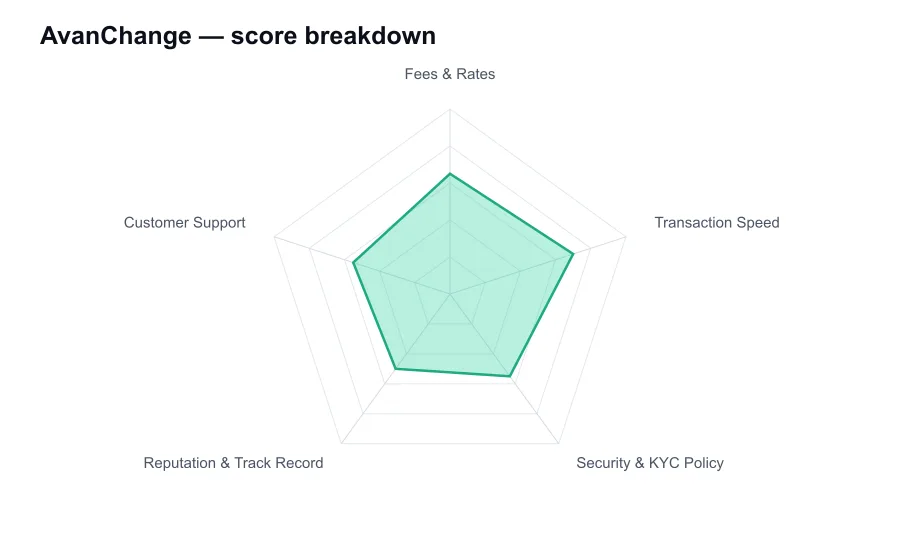
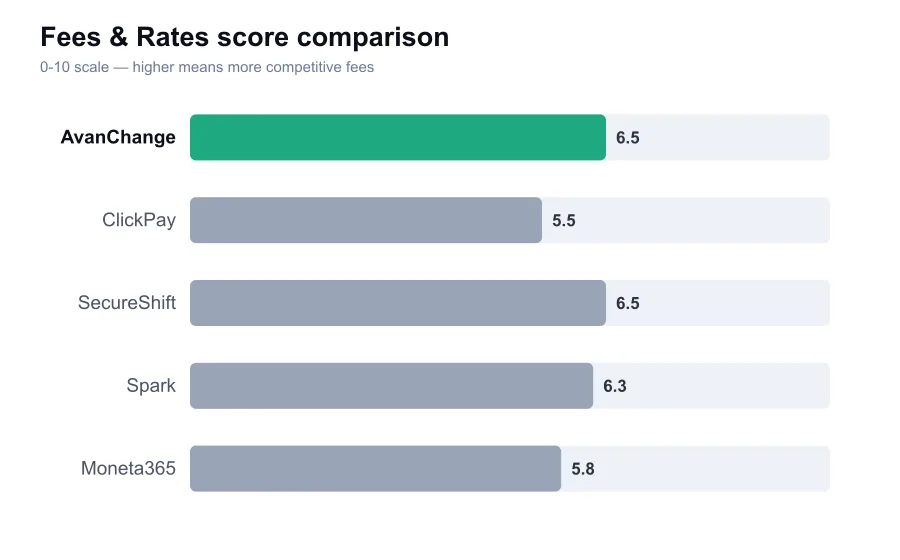
AvanChange's quoted rate deserves more scrutiny than its clean interface might suggest. The site does not function like a low-fee spot venue with a plainly published maker and taker schedule. Its compensation is normally built into the displayed conversion rate, with network fees and liquidity costs folded into the result. That is common among instant exchangers, but it makes comparing costs harder. A headline that says no commission does not mean the swap is free.
In practice, the number that matters is the final amount shown before you send. Compare it against at least one major alternative and against the live market price. On common pairs, the effective spread can be acceptable for a convenience purchase, especially if you are avoiding multiple withdrawal fees. On thinner coins, cross-chain swaps, or fiat-adjacent routes, the gap can widen substantially. I would not use AvanChange for a large rebalance without calculating the effective percentage cost first.
Fixed-rate quotes are particularly useful if they are offered for a chosen pair, because they reduce the anxiety of sending funds during a fast market move. They are not magic, though. A fixed quote normally has a time limit and requires the exact deposit amount. Miss that window, send from a wallet that deducts an unexpected fee, or submit a transaction with an unusually low miner fee, and the trade may need manual handling. That is where smaller swap services reveal their operational quality.
Speed is good under ordinary conditions. After the incoming transaction has enough blockchain confirmations, liquid pairs can often be completed within minutes, with Bitcoin deposits naturally taking longer than assets on faster chains. The bottleneck is rarely the AvanChange form itself. It is confirmation time, available liquidity, wallet maintenance, and whether the receiving chain is congested. Anyone promising a guaranteed instant result across every asset is selling a fantasy.
The more awkward cases are the ones prospective users should care about. A transaction that arrives late, is sent on the wrong network, or triggers a compliance review can turn a short swap into a support case. AvanChange does not have the public operational history of a Binance, Kraken, or Coinbase to make those edge cases easy to assess. A small test transaction is sensible before trusting it with an amount that would be painful to have delayed.
Its privacy posture is also best described as conditional rather than anonymous. An exchange flow may begin without compulsory account registration, which is a real convenience. But transaction screening, sanctions checks, source-of-funds questions, or an unusual risk signal can lead to an identity request. That is now standard practice across reputable swap providers. Users who interpret no sign-up as a promise of no KYC under any circumstances are likely to be disappointed.
That conditional KYC model creates a practical risk. If a swap is paused after funds are sent, you may have to decide whether you are willing and able to provide requested documents. Read the terms before depositing, particularly the clauses on refunds, rate changes, and compliance holds. A service can be technically non-custodial in its normal workflow while still controlling the exchange process and temporarily holding funds during an exception.
Security information is less extensive than I would like. Large exchanges publish detailed custody practices, licensing disclosures, proof-of-reserves material, and long-running security documentation. AvanChange does not have that same level of independently verifiable transparency. That does not prove the service is unsafe, but it limits the confidence a careful reviewer can assign. Use a self-custody wallet, verify the domain carefully, and never treat a swap provider as a long-term storage solution.
Reputation is similarly modest rather than disastrous. AvanChange has recognition in the instant-exchange niche, but its public footprint is not comparable with the platforms that have handled years of intense scrutiny, major market cycles, and millions of visibly documented customers. Reviews on exchanger-monitoring sites can be helpful for spotting recurring delays, yet they are not a substitute for a strong regulatory record or independently audited operations.
Customer support appears to be built around online ticketing and chat-style contact rather than a large, round-the-clock service organisation. That can be adequate for a routine transaction. The test is whether somebody can explain a delayed payment, a failed payout, or a compliance request with clear timelines. Smaller services often answer quickly at first, then struggle with complicated chain-specific issues. Keep transaction IDs, screenshots, and the exact quoted amount ready if you need help.
I also dislike the tendency of instant-swap users to blame every late transaction on the provider. Bitcoin confirmation delays, Ethereum gas spikes, and wallet maintenance happen. Still, a good operator gives status updates before a customer has to chase them. AvanChange would benefit from more visible service-status reporting and more detailed public documentation around failed or delayed orders. Those improvements matter more than cosmetic claims about being fast.
AvanChange is a reasonable tool for a measured, modest swap when its quote beats or matches better-known alternatives. It is not the venue I would choose for high-value conversion, recurring business settlement, or a transaction where compliance uncertainty would cause a serious problem. The service's strengths are simplicity and potentially competitive quotes. Its weakness is that its public track record and transparency do not yet justify blind trust.