CoinDrop is difficult to place in the crypto market because there is no consistently documented, widely recognised exchange operation under that exact name. A credible review starts there. Unlike established names such as Coinbase, Kraken, Bitstamp, or Coinmotion, CoinDrop does not present the kind of public regulatory footprint, product documentation, executive history, and independently verifiable trading information that lets a user judge it as a conventional exchange.
That does not automatically prove wrongdoing. Small crypto services often launch quietly, operate in a narrow region, or change brands. But financial platforms do not get the benefit of the doubt merely because they use familiar crypto language. If a site asks for funds, wallet access, identification documents, or a bank transfer, users need to know who operates it, what jurisdiction applies, and what happens if an order goes wrong. Those basics are not optional details.
The first concern is the lack of a clearly established official web presence that can be matched to a known legal entity. A search result, social account, app listing, or sponsored post is not enough. Copycat domains and short lived trading sites are common in this sector. Before depositing anything, a prospective CoinDrop user should independently verify the exact domain, company registration, support address, and terms of service. If those items cannot be verified, walking away is the sensible choice.
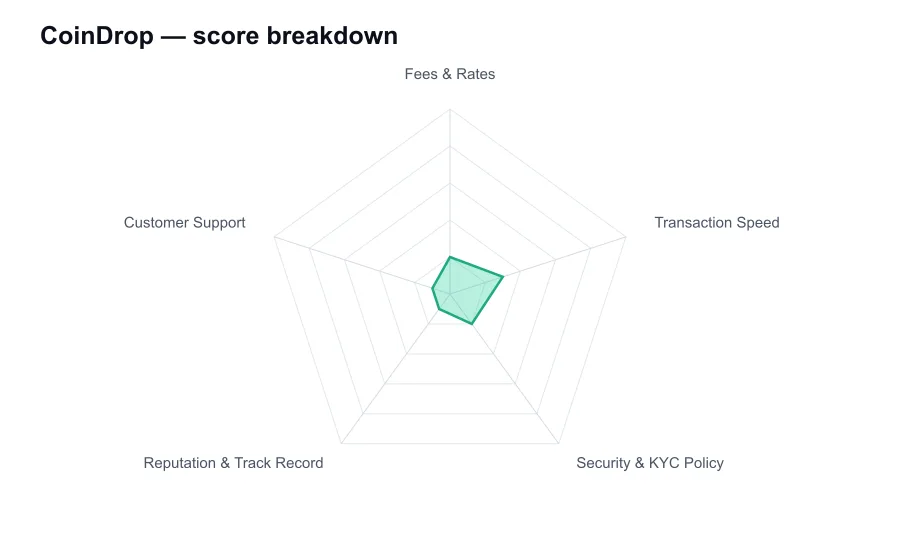
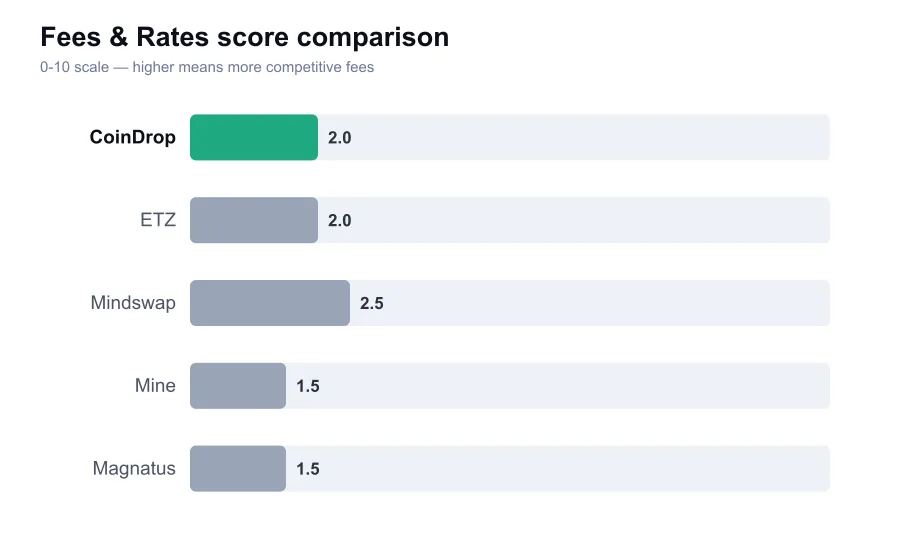
Pricing is similarly hard to evaluate. Established exchanges publish trading fees, withdrawal charges, spread treatment, supported payment methods, and sometimes a detailed fee schedule for each account tier. CoinDrop does not have a broadly documented public schedule that can be checked against a live product. That means there is no responsible basis for calling it cheap, expensive, or competitive. An attractive headline rate means little if the final quote includes an opaque spread or a withdrawal restriction.
This matters more than newcomers sometimes realise. A platform can advertise zero commission while making money through a wide buy and sell spread. On a modest Bitcoin purchase, the difference between a tight market price and a poor quote can exceed the visible fee by several percentage points. The user may not spot that cost until they try to sell. A legitimate provider should show the quoted crypto amount, fiat total, fees, exchange rate, and withdrawal conditions before confirmation.
Transaction speed cannot be separated from transparency either. Crypto transfers themselves settle according to the blockchain involved. Bitcoin may take from minutes to an hour or longer for meaningful confirmations, while many stablecoin transfers can arrive faster. The important question is whether the provider processes a withdrawal promptly after a customer requests it. CoinDrop has no well established body of dependable public evidence on order execution, withdrawal times, or operational uptime.
Any platform can claim instant purchases. That phrase often refers only to the moment a card payment is authorised or an internal balance appears. It does not necessarily mean the user can immediately withdraw coins to a private wallet. Some services hold newly purchased assets until payment risk checks clear. That can be reasonable if clearly disclosed. What is not acceptable is discovering an unexplained delay only after money has been sent.
Security is where the absence of verifiable information becomes most serious. A reputable crypto business should explain whether it is custodial, whether customer assets are segregated, how it handles hot wallets, what account protections exist, and how users can secure access with two factor authentication. It should also publish a privacy policy and terms that identify the responsible organisation. Without these, users cannot make an informed judgement about custody risk or personal data handling.
KYC policy is another unanswered point. Some legitimate providers require identity checks because they operate under anti money laundering obligations. Others offer noncustodial wallet software and do not directly collect identity documents, although integrated payment or swap partners may. CoinDrop's model is not sufficiently established to tell users what information it requests, why it requests it, how long it retains it, or whether it uses a regulated verification provider.
A lack of history weakens its reputation score more than a new company would like to hear, but reputation in crypto is earned slowly. A strong track record includes several market cycles, visible handling of outages, stable withdrawal operations, security disclosures, and years of customer feedback from sources that are not controlled by the company. CoinDrop does not have that record in the public domain. It should not be ranked beside firms that have survived real operational stress.
Customer support is impossible to rate positively without dependable evidence of response channels and dispute handling. A contact form is not a support operation. Users should expect a documented email address, a knowledge base, account recovery rules, and a clear escalation path. If support exists only through Telegram, WhatsApp, or direct messages, treat that as a serious warning sign. Those channels are especially easy for impersonators to abuse.
The most practical test is boring but effective. Do not start with a large bank transfer or a life changing crypto purchase. Verify the company details first. Then, if the service checks out, use the smallest possible amount, confirm the all in quote, test a withdrawal to a wallet you control, and retain every record. Never give a supposed support agent a seed phrase, remote access to a computer, or a one time authentication code.
CoinDrop might eventually prove to be a real niche product with a clearer public identity, but it has not earned that trust from the information readily available today. Crypto is already risky enough without adding platform ambiguity to market volatility. There are better documented routes to buying, selling, and holding digital assets, including regulated local brokers and established self custody wallet providers.
My view is blunt. CoinDrop is not a platform I would recommend for deposits until its operator, pricing, security controls, and customer service record can be independently verified. The problem is not that it is small. The problem is that basic due diligence produces too many blank spaces. A user looking for a credible exchange should choose transparency over novelty, even if that means paying a slightly higher advertised fee.