CryptoVortex is another name that cannot be reviewed as a normal established exchange because a dependable, clearly attributable provider identity is not readily available. The crypto industry is full of names built from dramatic words such as crypto, vortex, quantum, capital, and prime. That branding may look modern, but it tells a customer almost nothing about who holds their money, where the business is based, or whether withdrawals can be relied upon.
A serious exchange review needs more than an attractive landing page or a claimed return on a social media post. It needs an official domain tied to a legal entity, readable terms, a physical or registered business address, a clear list of services, a current fee schedule, and some evidence that the company has operated through ordinary market stress. CryptoVortex does not have a sufficiently clear public profile on those points to justify confidence.
The name itself also creates a verification problem. Generic crypto brands are easy to imitate, and scammers often use names similar to existing apps, trading groups, or inactive companies. A user who searches CryptoVortex may encounter unrelated pages, promotional content, or impersonators. That ambiguity is dangerous. Before any interaction, verify the exact URL through independent company records rather than trusting a link delivered by email, a messaging app, or a supposed account manager.
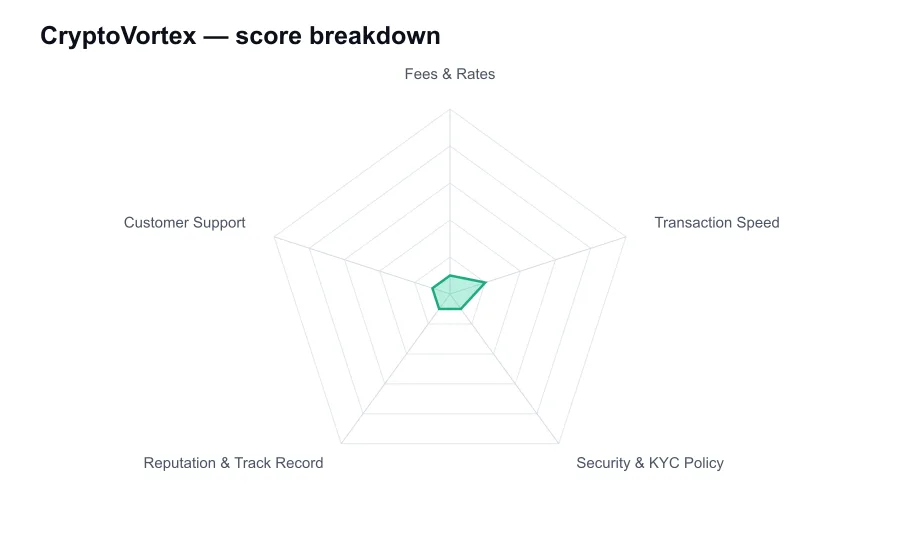
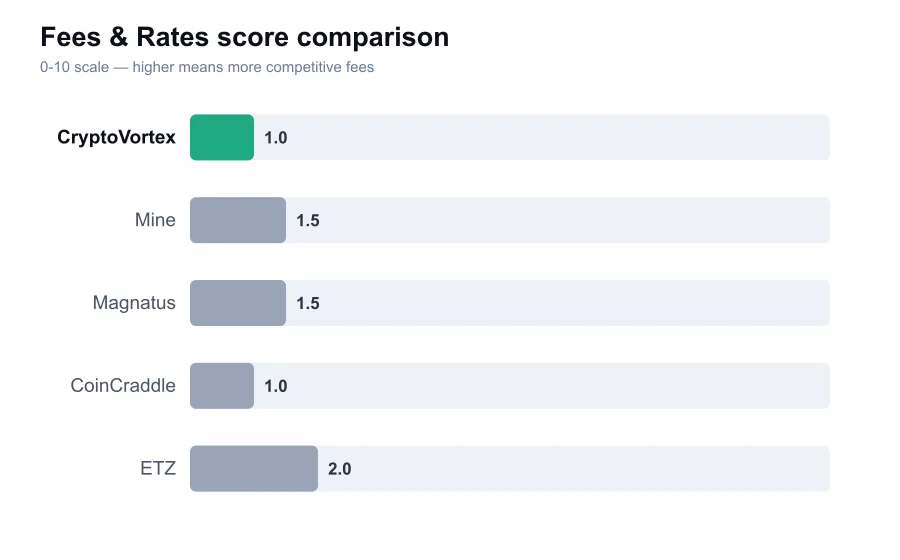
There is no reliable public fee table that establishes CryptoVortex's spot trading charges, spread policy, deposit cost, or withdrawal charge. That leaves a user unable to calculate the true cost of using it. A platform should not make customers guess whether the advertised price includes a spread, whether a withdrawal costs a fixed amount, or whether a minimum account balance must be maintained. These are basic commercial disclosures, not trade secrets.
Opaque fees are especially harmful in crypto because the visible number is often not the final cost. A service can advertise no commission and still quote a Bitcoin purchase far above the market rate. It can charge little to deposit but impose a large network withdrawal fee. It can display a paper profit then demand a tax, insurance payment, or unlocking charge before releasing funds. Legitimate brokers may charge fees, but they show them before a customer commits and do not invent new payment hurdles at withdrawal.
Speed claims should be treated with the same suspicion. CryptoVortex has no well documented public history of handling customer withdrawals, settling purchases, or maintaining uptime under demand. Any claim of instant trading should be separated from the question that matters most, can the user withdraw their own assets promptly to an external wallet? If the answer is not demonstrably yes, the platform is not functioning as a trustworthy place to hold funds.
Blockchain settlement also cannot excuse an exchange's internal delays. Bitcoin confirmations can take time, and congested networks can increase fees. Those are normal conditions. But a provider should state whether it processes withdrawals automatically, whether manual review applies, what limits exist, and how long reviews ordinarily take. A vague pending status, an unexplained compliance hold, or repeated requests for further deposits are all reasons to stop sending funds.
Security claims are impossible to score highly without operational disclosure. Credible providers explain two factor authentication, device management, withdrawal address controls, cold storage strategy, incident response, and the legal treatment of client assets. They do not simply display a padlock icon or say military grade security. Those phrases are marketing, not evidence. CryptoVortex does not offer enough independently verifiable information to assess whether customer assets or personal information are protected adequately.
The KYC question is equally important. A real financial service should explain whether identity verification is required, which company performs it, which documents are accepted, and how data is retained. No KYC marketing can be tempting, but it often masks a lack of compliance rather than providing genuine privacy. Conversely, a site that asks for a passport and selfie without a verifiable operator creates its own risk. Users should never upload sensitive identity documents to a platform they cannot confidently identify.
Reputation depends on a record that can be checked outside the company's own channels. CryptoVortex does not have a substantial, well established history in respected industry reporting, regulatory registers, or long running independent user communities. A few glowing testimonials on a site prove very little, particularly if they lack dates, transaction context, or verifiable identities. Trustpilot style ratings can be useful as one signal, but they are not a substitute for checking the company behind the brand.
The absence of a known track record is more damaging than a low score for customer support. Support quality matters after something goes wrong, and crypto has plenty of ways to go wrong. A genuine support team should have a documented contact route, clear fraud warnings, privacy procedures, and an escalation process. It should never contact users first through a private messaging account and ask for their seed phrase, remote access, or a payment to release funds.
If someone has already opened an account under the CryptoVortex name, the right approach is caution, not panic. Do not add more money to fix a supposed account issue. Save screenshots, transaction hashes, emails, and chat messages. Try a small withdrawal to a wallet you control, but do not pay a withdrawal tax, verification deposit, liquidity fee, or recovery charge. Those demands are common red flags. Seek advice from the relevant financial regulator or consumer fraud service if money becomes inaccessible.
For a new user, the safer choice is obvious. Use an exchange with an identifiable operator, established withdrawal history, public fees, and a legal presence in your region. Then transfer long term holdings to a wallet where you control the keys if that suits your experience level. This is less exciting than a promised automated trading system or exclusive account manager, but boring is exactly what a financial service should be.
My assessment of CryptoVortex is not that every use of the name must be fraudulent. It is that the available information does not clear the minimum bar for recommending it as a place to trade, invest, or store crypto. No discount, referral offer, or claimed profit should override that. Until a specific, verifiable CryptoVortex operator demonstrates transparent ownership, security controls, pricing, and successful withdrawals over time, users should keep their money elsewhere.