Coinomi is not a conventional cryptocurrency exchange, and judging it as one leads to bad expectations. It is a long running noncustodial multi chain wallet that gives users a place to hold and manage assets while connecting them to third party purchase and swap services. That distinction is fundamental. Coinomi does not ordinarily take custody of a user's recovery phrase, and it is not the party setting the market price for every swap shown in the app.
The wallet has been around since 2014, which gives it a longer history than most multi asset wallet brands. It supports a wide range of networks and tokens, and its appeal has always been breadth. A user can manage Bitcoin, Ethereum based assets, and many other chains from one interface rather than installing a separate wallet for each ecosystem. For a portfolio spread across older networks and niche assets, that remains genuinely convenient.
Convenience is not the same as exchange quality. Coinomi's integrated swap function routes users to third party providers, and its buy options also depend on external payment partners. The rate, available coins, payment methods, identity requirements, and completion time can therefore change by provider and country. Someone expecting a deep, transparent order book like Kraken's will be disappointed. Coinomi is an access layer, not a high liquidity trading venue.
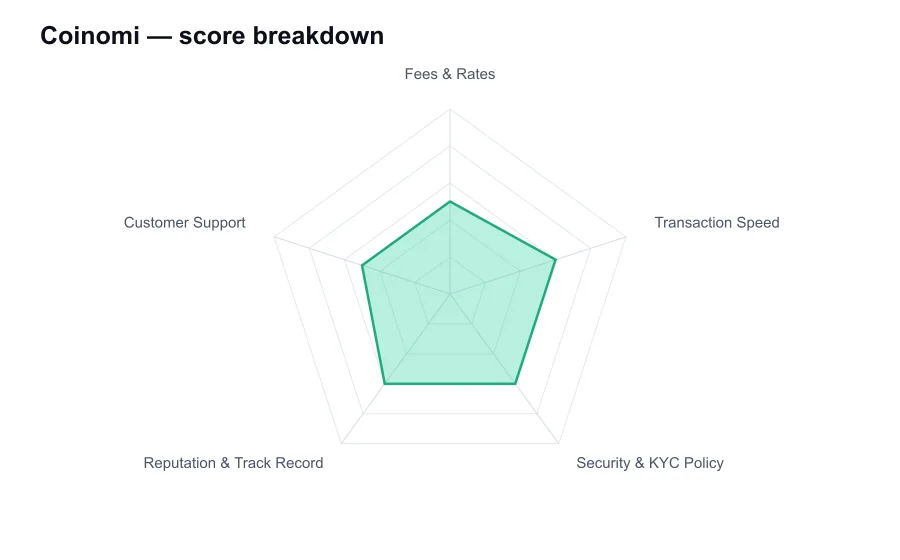
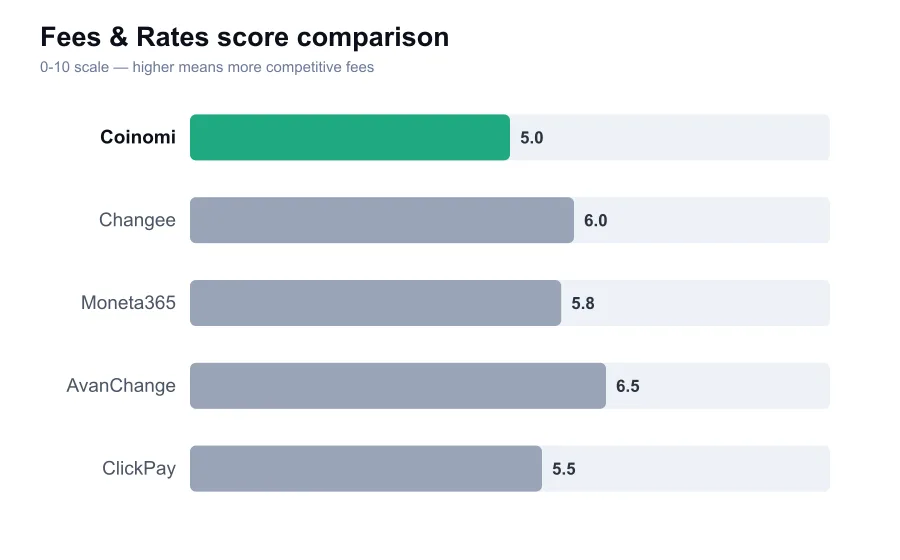
Fees are consequently more complicated than a single published trading percentage. Sending crypto from Coinomi requires the normal network fee charged by the relevant blockchain. Bitcoin fees rise and fall with mempool demand, while Ethereum gas can become painful during busy periods. Coinomi does not control those base network costs. The app may let users choose appropriate fee settings for some networks, but choosing a very low fee can make a transfer wait a long time.
Swaps create an additional layer of cost. The provider quote can include a service fee and a spread between the market price and the rate offered to the customer. That is normal for instant swap services, but users should compare the received amount with another source before confirming. A convenient in wallet conversion can be much more expensive than selling on a liquid exchange and withdrawing later. The premium might be acceptable for a small urgent swap. It is not something I would casually pay on a large trade.
Fiat purchases through the wallet are usually the most expensive route of all. Card processors and crypto on ramp companies charge for payment risk, compliance, and convenience. The final price can vary sharply by country, card type, and provider. Coinomi should be viewed as a handy way to access an on ramp when needed, not necessarily the cheapest way to acquire Bitcoin. Bank transfer purchases through a regulated local exchange are often better value.
Speed follows the same partner dependent pattern. Creating a wallet and receiving crypto is immediate at the software level, but a transaction is only settled once the relevant blockchain confirms it. A Bitcoin payment can take time. A swap may wait for deposits, network confirmations, provider processing, and the outgoing transaction. A card purchase might show a pending status while the payment partner runs fraud checks. Coinomi cannot make these external steps disappear.
The security model is strongest where Coinomi remains plainly noncustodial. The recovery phrase and private keys are created for the user, and control of that phrase is control of the funds. That avoids the exchange counterparty risk that comes with leaving a large balance at a centralised broker. It also creates a brutal responsibility. If the phrase is lost, no support agent can restore access. If it is copied into a cloud note or sent to a fake support account, the coins can be stolen.
Coinomi supports wallet encryption and password protection, but users should not mistake an app password for complete protection. A compromised phone, malware infected computer, malicious browser extension, or fake download can defeat careless habits. Install only from Coinomi's verified official channels, keep the operating system updated, and store the recovery phrase offline on paper or durable metal. Never photograph it, email it, or enter it into a website claiming to validate a wallet.
The project has faced security scrutiny in the past, including a reported 2019 vulnerability concerning phrase handling on desktop software. Coinomi said it addressed the issue. The lesson is broader than any single incident. Wallet software must be treated as security critical, and users should update promptly and remain alert to independent research. Coinomi's codebase has not offered the same fully open, easily auditable posture that security minded users may prefer from wallets such as Electrum or Sparrow for Bitcoin.
KYC is nuanced here. Coinomi itself, as a noncustodial wallet, does not operate like a bank account requiring identity checks simply to create a wallet. But integrated exchange and purchase partners frequently do require KYC, especially for card payments or fiat conversions. A user who wants private self custody can use the wallet without buying inside it, then receive crypto from another source. A user who taps a card purchase button should expect third party compliance checks.
Reputation is respectable but not spotless. Longevity, broad asset support, and years of use count in its favour. Yet Coinomi does not have the cleanest possible reputation among security maximalists, partly because of past criticism and the closed source question. It has also had to operate in a market saturated with fake apps and impersonation attempts. That is not uniquely Coinomi's fault, but it means newcomers need to be especially disciplined about downloads and support messages.
Support is adequate for a self custody wallet but cannot reverse blockchain transactions or recover lost phrases. Coinomi offers support resources and ticket based assistance, though response quality can depend on the question and the external partner involved. If a swap is delayed, the wallet team may need to coordinate with the swap provider. If a user sends funds on the wrong network, there may be no technical remedy. That limitation should be understood before pressing send.
Coinomi is useful for experienced users who genuinely need a broad multi chain wallet and understand self custody. It is less appealing for a beginner buying their first crypto with a debit card, because the extra layers of rates, third parties, and wallet responsibility create too many places to make a costly mistake. My preference is to use Coinomi for storage and basic asset management if its supported networks fit the job, then use a transparent exchange for larger purchases and sales. It remains capable software, but it is not the cheap, frictionless exchange some marketing language can make it sound like.