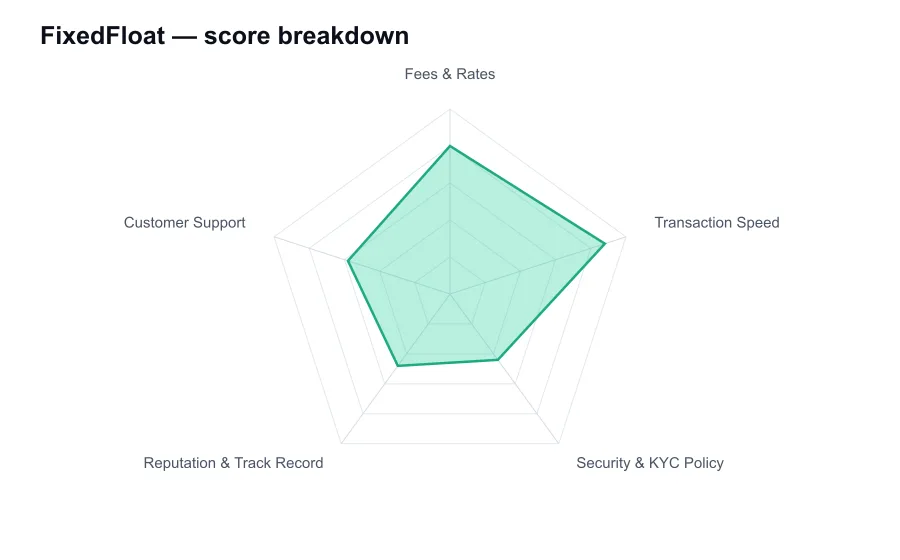
FixedFloat is one of the most recognizable no account crypto swap services, particularly among Bitcoin and Lightning Network users. Its formula has always been blunt and appealing. Choose a pair, send crypto, receive crypto, and avoid registration for ordinary orders. For years, it stood out because it supported Lightning payments early and made fast BTC conversions feel less awkward than they did on conventional exchanges.
The product has two rate modes. FloatRate follows the market while the order is being processed, and FixedRate locks the stated exchange rate for the deposit window. The distinction is not decorative. FloatRate is generally better for users chasing a lower quoted cost and willing to accept price movement. FixedRate is better for anyone who needs a known payout. That can include a merchant, an invoice payer, or a holder moving funds during a sharp market swing.
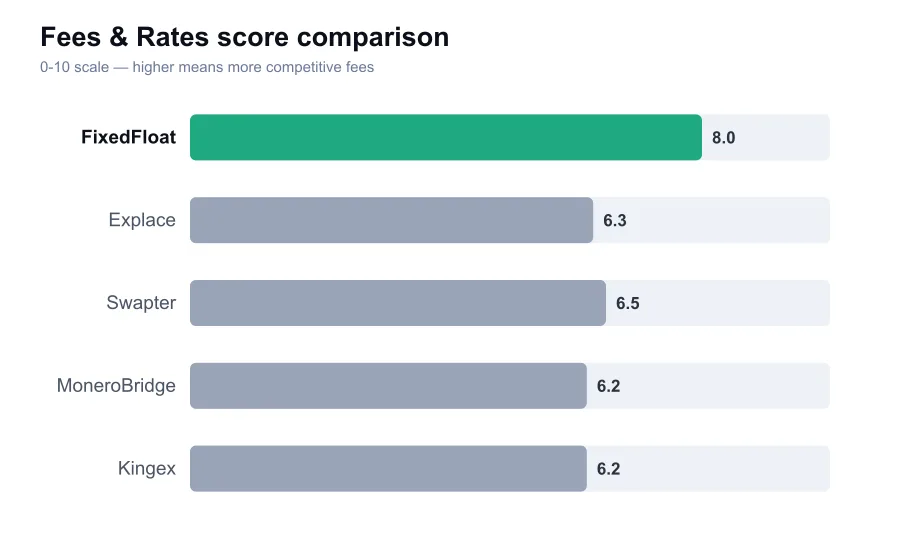
FixedFloat has been unusually direct about its basic fee structure. FloatRate orders have commonly carried a 0.5 percent service fee, while FixedRate orders have commonly carried a 1 percent fee, with network costs added to the transaction economics. The exact effective price still depends on the pair and blockchain conditions. But this published structure is far easier to evaluate than the vague all inclusive quotes used by many competitors.
That transparency does not mean FixedFloat is always cheapest. A major centralized exchange can beat it for larger liquid trades, especially if you already hold funds there and can withdraw cheaply. A decentralized exchange can also be cheaper for some token routes. FixedFloat's value is speed and low friction, not a guarantee of best execution. Compare the final output, not merely a headline percentage, because miner fees can dominate a small Bitcoin transaction.
Lightning remains the feature that makes FixedFloat more than another swap widget. Lightning deposits and withdrawals can dramatically reduce waiting time and fee pain for smaller BTC transfers, assuming the user understands invoices, liquidity, and the difference between an on chain address and a Lightning payment request. For technically comfortable Bitcoin users, this can be genuinely excellent. For newcomers, it is powerful but not forgiving of careless copying and network selection mistakes.
On straightforward orders, the exchange engine has historically been fast. A Lightning based route can complete in minutes. Fast chains often settle promptly after the incoming transfer is detected. Bitcoin on chain transactions remain dependent on confirmation conditions, and Ethereum token swaps can slow down during congestion. The service's automation is a strength, but no automated service can repair a deposit sent with too little fee, an expired fixed rate order, or an incorrect network choice.
FixedFloat's security model is attractive to privacy minded users because it does not require a regular account or invite customers to leave balances on the platform. There is no portfolio page tempting people to turn a swap service into a wallet. That is good discipline. The customer controls assets until the deposit is sent and receives the converted assets directly to a wallet. Temporary control during the swap still belongs to the service, which should never be forgotten.
The no KYC reputation also needs qualification. FixedFloat has historically allowed standard use without identity documents, but it maintains compliance language and can freeze or review suspicious transactions. This is not the same as a regulated exchange with routine identity checks, yet it is also not an unconditional anonymity guarantee. Blockchain analytics, sanctions screening, and source of funds questions can affect an order. Anyone who says otherwise is describing a fantasy, not the current crypto market.
The central reputational issue is the February 2024 security incident. Blockchain investigators linked a theft of roughly $26 million in Bitcoin and Ether to FixedFloat addresses, and the service acknowledged that a hack and associated losses had occurred. It later stated that it had been working to restore operations. This event cannot be brushed aside. A provider handling customer flows has a serious credibility problem after such a breach, even if its architecture does not hold permanent customer balances.
The incident changes the recommendation materially. Before it, FixedFloat could be praised as a nimble, technically sharp exchanger with a strong Lightning niche. After it, users need to ask whether the service is currently operating normally, whether a particular route is live, and whether they are comfortable exposing funds to a business that has suffered a major compromise. A sleek order form or a favorable rate is not enough to answer those questions.
There is also a difference between a platform breach and a customer loss, but that distinction should not become an excuse. A swap service can have limited custodial duration and still expose users to operational disruption at the exact moment they need access to their money. The practical risk is not just theft. It is delayed processing, unavailable support, uncertain reserves, and difficulty obtaining a clear explanation during an incident.
Support has traditionally been centered on email and online messaging rather than a large public facing help operation. That suits ordinary order questions, and experienced users often need little assistance when everything works. During exceptional cases, however, the lack of a conventional account dashboard, phone channel, and highly visible dispute process becomes more troubling. The sharper the incident, the more the service's minimalist design feels like a constraint instead of a virtue.
FixedFloat still deserves credit for technical innovation. Lightning integration, clear fixed versus floating choices, and published fee logic put it ahead of many opaque instant exchangers on product design. I would happily describe its interface as efficient. I cannot give the same uncomplicated endorsement to its trust profile after the hack. Technology can be excellent while business risk remains unacceptable for a particular user or transaction size.
My take is simple. FixedFloat can make sense for an experienced user conducting a small, time sensitive swap, especially one involving Lightning, after independently confirming that the relevant route is operational. It is not where I would send a large part of a portfolio or funds needed urgently for a major payment. The service's strengths are real, but the security event weighs heavily. Convenience is never a good reason to ignore a damaged track record.