Swapter is a smaller instant crypto exchange built around a familiar promise: swap coins directly from one wallet to another without creating a conventional trading account. It has the kind of clean, low-friction interface that appeals to users who find order books, custody dashboards, and identity checks excessive for a single conversion. The service is easy to understand. The harder question is whether its convenience is enough to offset the thinner public track record compared with the category's established names.
The first thing I like about Swapter is that it does not pretend to be a complete investment platform. There are no elaborate charting tools or artificial social-trading features trying to turn a simple exchange into an app ecosystem. You choose the assets, specify a receiving wallet, and send the deposit. For a user who knows exactly what they are doing, that restraint is welcome. Less interface clutter can mean fewer chances to make a basic mistake.
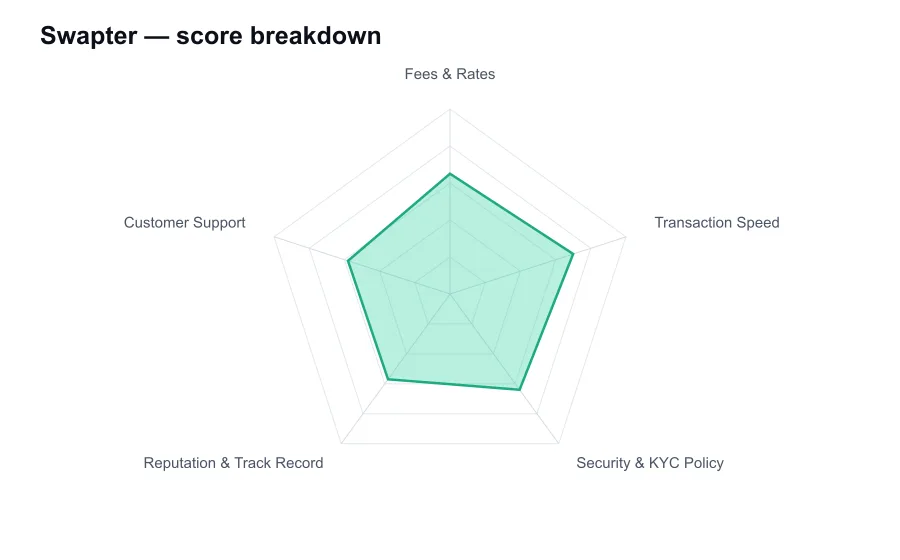
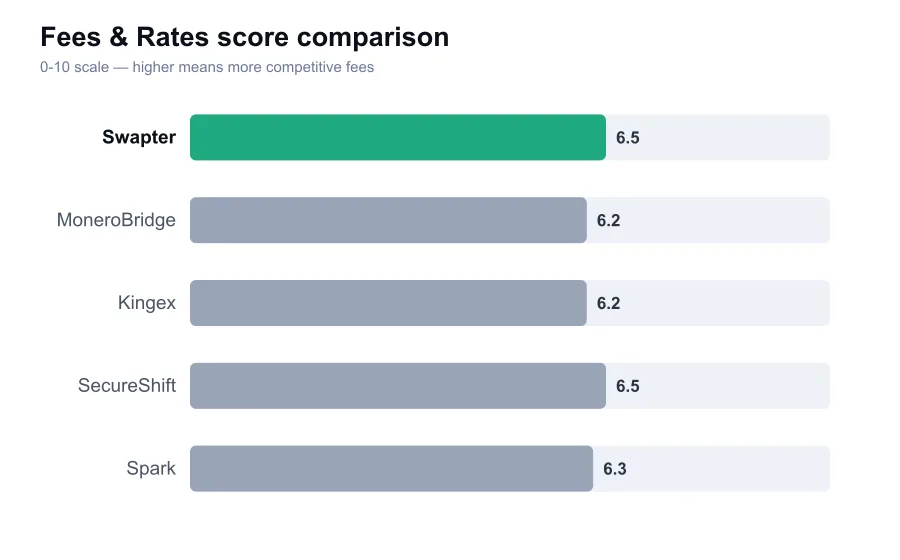
But a spare interface can also conceal the real economics. Swapter, like other instant-swap services, is not an order-book exchange where customers can inspect bids and asks. Its quote is a packaged price. It may include a service margin, market spread, liquidity-provider cost, and network expense. The relevant comparison is never a vague claim about low fees. It is the amount of crypto that will actually land in the destination wallet.
That matters most on popular pairs, where alternatives are plentiful. A BTC to ETH or USDT to SOL conversion can be quoted in seconds by several providers, and the resulting differences may be larger than people expect. Swapter can be competitively priced on one route and merely average on the next. I would not send a large order based on a previous small transaction. Quotes are pair-specific and time-sensitive, especially when the market is moving quickly.
The platform is more defensible for convenience-driven swaps than for active trading. If you need a one-off conversion between wallets, avoiding registration has a value. If you are swapping every few days, the cumulative spread can become expensive. A spot exchange with limit orders, transparent fees, and low-cost withdrawals will usually win over time. Swapter is the shortcut, not the wholesale venue.
Speed follows the usual instant-exchange pattern. Once Swapter receives a deposit with the necessary blockchain confirmations, the conversion itself can be quick on a liquid route. A fast network and an available liquidity partner can make the experience feel almost immediate. Bitcoin deposits, congested Ethereum transactions, and less liquid token pairs can alter that picture entirely. Users should read the estimated time as an estimate, not a delivery promise.
A useful discipline is to check the sending transaction before blaming the exchange. If the deposit is unconfirmed, underpriced, or sent on an unsupported network, Swapter cannot safely process it. If the deposit is confirmed and the payout is absent, then the order ID and blockchain hash become the essential evidence for support. This is mundane advice, but it is what separates a manageable delay from a panicked and poorly documented support request.
Swapter's account-light setup reduces the amount of personal information required for a normal transaction. That is attractive to people who do not want to submit a passport simply to exchange crypto already held in a private wallet. It should not be confused with a guarantee that no identification will ever be requested. Risk-based anti-money-laundering screening is common throughout this market, and services may pause transactions that trigger their compliance systems.
That policy creates a real practical risk for users who treat any no-sign-up service as a privacy shield. If the source of funds is questionable, if blockchain analytics flags an address, or if an order appears unusual, an exchange can request documents or additional information. I do not regard the existence of an AML policy as a negative by itself. The concern is how visibly it is explained before funds are sent, and how consistently a provider communicates during a review.
Security is also partly a question of operational maturity. Swapter does not hold a standing customer balance in the way a centralized exchange does, which limits the risk of leaving funds sitting in an account. Yet the assets are still entrusted to the service during settlement. There is no deposit insurance, no chargeback mechanism, and no guarantee that a support request can repair an error. Check token tickers, contract addresses, destination networks, and any memo requirements before pressing send.
Its reputation is the area where I would be most conservative. Swapter has an identifiable web presence and can be a functional option, but it does not have the depth of long-running public evidence that makes a provider like StealthEX easier to recommend. A smaller review footprint is not proof that a service is unsafe. It does mean there is less independent material to assess how it behaves through stressed markets, liquidity disruptions, and difficult support cases.
For that reason, testing with a small amount is not merely a ritual. It is the correct way to assess a newer or less documented service. See whether the quote is honored reasonably, whether status updates are intelligible, and whether the payout arrives on the selected network. If that experience is good, Swapter may deserve a place in your comparison list. It still should not receive the first large transfer from a wallet that matters to you.
Support appears geared toward transaction assistance rather than the extensive knowledge base and public service apparatus available at bigger platforms. That can be perfectly adequate for a standard order. In a complicated delay, especially one involving external liquidity or compliance review, smaller services can feel less reassuring because there are fewer visible escalation paths. Customers should preserve their order details from the start and give support precise information instead of sending repeated vague messages.
Swapter is not a bad proposition. It is simply a provider that needs to earn confidence through use rather than by relying on a famous name or a decade of visible operating history. For a small swap where its final quote is attractive, the uncomplicated flow has real appeal. I would place it behind the established leaders for larger transactions and behind a regulated exchange for regular trading. It is a reasonable backup option, not the first platform I would build a crypto routine around.